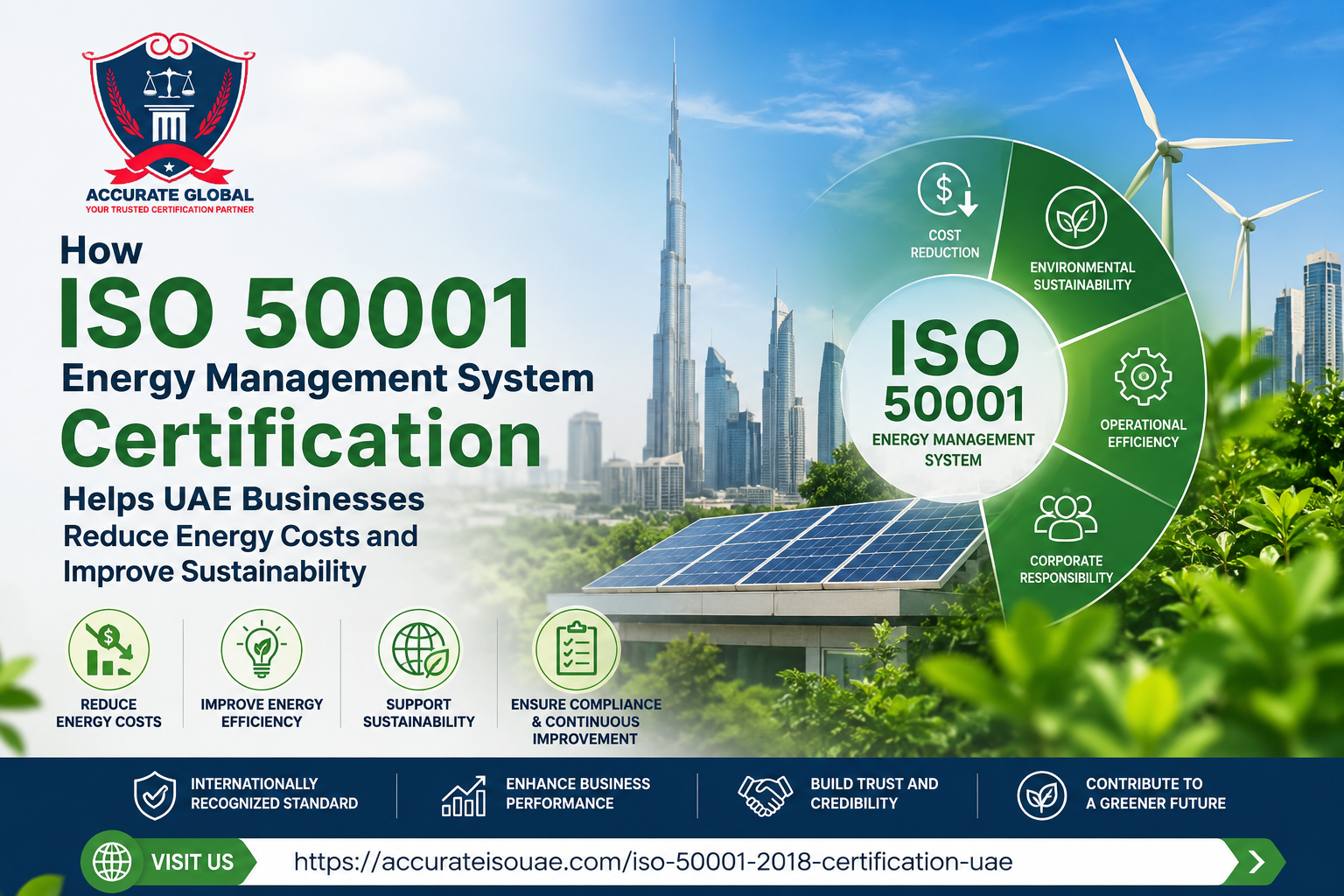
How ISO 50001 Energy Management System Certification Helps UAE Businesses Reduce Energy Costs and Improve Sustainability
In today’s competitive business environment, organizations across the UAE are focusing on reducing operational costs, improving energy efficiency, and achieving long-term sustainability goals. Rising energy consumption, environmental concerns, and strict regulatory expectations have made energy management a top priority for businesses of all sizes. This is where ISO 50001 Energy Management System Certification plays a crucial role.
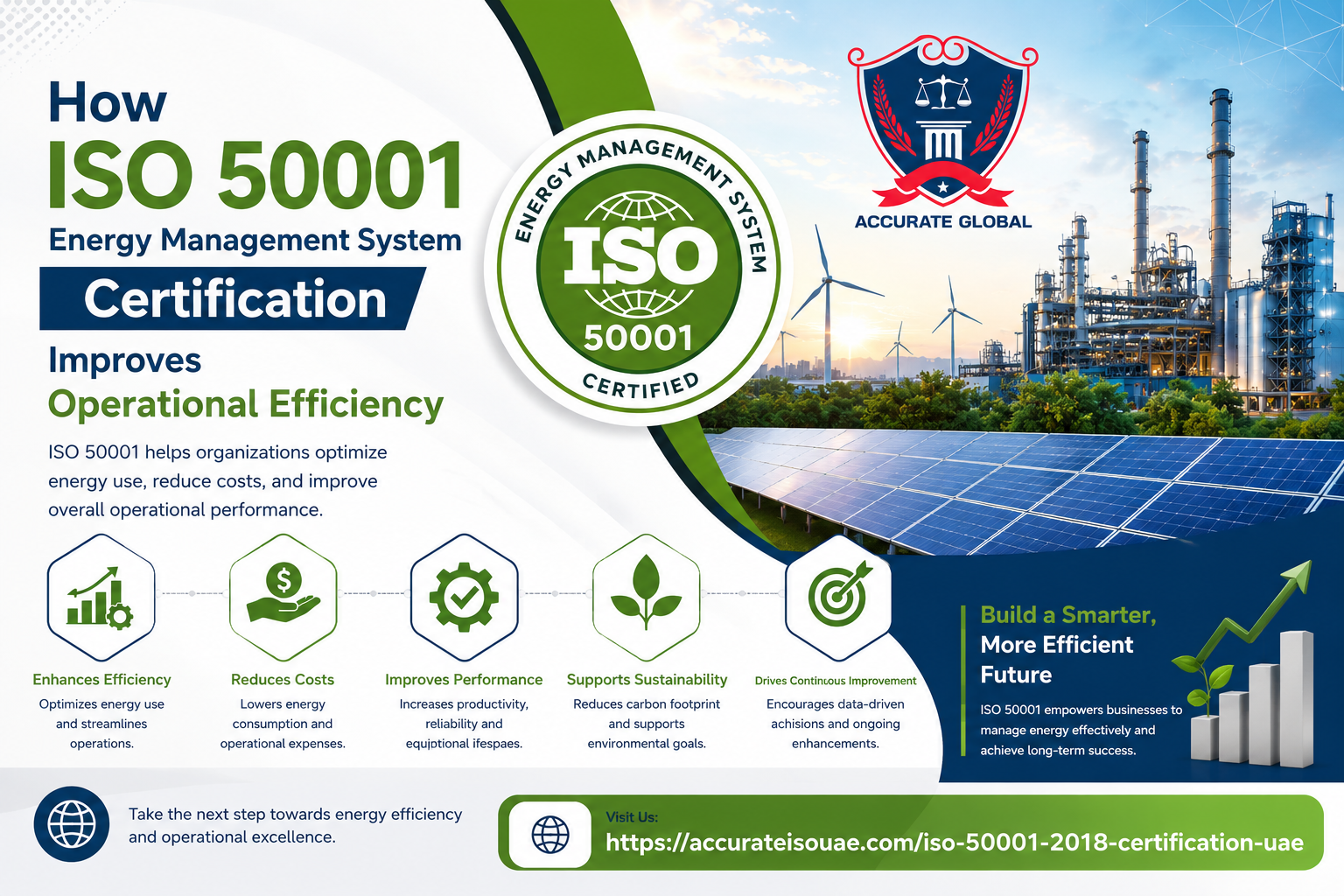
ISO 50001 is an internationally recognized standard designed to help organizations establish, implement, maintain, and improve an effective Energy Management System (EnMS). The certification provides a structured framework that enables businesses to monitor energy usage, reduce waste, improve energy performance, and lower operational expenses. For companies operating in the UAE, ISO 50001 certification is becoming increasingly important for maintaining sustainability and improving overall business performance.
What is ISO 50001 Energy Management System Certification?
ISO 50001 Energy Management System Certification is a globally accepted standard developed by the International Organization for Standardization (ISO). The standard focuses on helping organizations improve energy efficiency, optimize energy consumption, and reduce greenhouse gas emissions through systematic energy management practices.
The certification applies to businesses of all sizes and industries, including manufacturing, construction, hospitality, healthcare, logistics, oil and gas, and commercial enterprises. By implementing ISO 50001, organizations can establish clear energy policies, set measurable objectives, and continuously improve energy performance.
Importance of Energy Management for UAE Businesses
The UAE is one of the fastest-growing economies in the Middle East, with increasing industrial activities, infrastructure development, and commercial operations. These activities require significant energy consumption, which often leads to higher operational costs and environmental impact.
Businesses in the UAE are now under pressure to adopt sustainable practices that align with government initiatives such as UAE Net Zero 2050 and environmental sustainability programs. Implementing ISO 50001 Energy Management System Certification helps organizations support these national goals while improving business efficiency.
Effective energy management not only reduces electricity and fuel costs but also enhances corporate reputation, environmental responsibility, and regulatory compliance.
How ISO 50001 Helps Reduce Energy Costs
1. Identifies Energy Waste
One of the major benefits of ISO 50001 certification is its ability to identify areas of unnecessary energy consumption. Businesses can analyze energy usage patterns, monitor equipment performance, and detect inefficiencies in operations.
This process helps organizations take corrective actions such as upgrading machinery, improving maintenance practices, and reducing excessive energy use. As a result, companies can significantly lower utility expenses and operational costs.
2. Improves Energy Efficiency
ISO 50001 encourages organizations to adopt energy-efficient technologies and operational processes. Businesses can optimize lighting systems, HVAC systems, production equipment, and other energy-consuming activities.
Improved energy efficiency directly contributes to cost savings and better resource utilization. Over time, these savings can positively impact overall profitability and business growth.
3. Encourages Continuous Monitoring
The standard requires organizations to continuously monitor and measure energy performance indicators. Regular monitoring allows businesses to track improvements, identify new opportunities for savings, and maintain long-term efficiency.
This proactive approach ensures that energy-saving initiatives remain effective and sustainable over time.
4. Reduces Maintenance and Operational Expenses
Energy-efficient systems and properly maintained equipment consume less energy and operate more effectively. ISO 50001 helps businesses establish preventive maintenance practices that improve equipment performance and reduce unexpected breakdowns.
Lower maintenance costs and improved operational reliability contribute to higher productivity and reduced downtime.
How ISO 50001 Supports Sustainability
1. Reduces Environmental Impact
One of the key objectives of ISO 50001 Energy Management System Certification is to minimize environmental impact by reducing energy consumption and greenhouse gas emissions.
Businesses that implement the standard can actively contribute to environmental protection and climate change reduction. This demonstrates corporate social responsibility and strengthens sustainability efforts.
2. Supports UAE Sustainability Goals
The UAE government strongly promotes sustainability, renewable energy, and environmental responsibility. ISO 50001 certification aligns with national sustainability initiatives and helps organizations meet environmental compliance requirements.
Certified businesses are better positioned to support green building programs, energy conservation initiatives, and sustainable development strategies.
3. Enhances Corporate Reputation
Modern consumers, investors, and stakeholders prefer businesses that demonstrate environmental responsibility. ISO 50001 certification shows that an organization is committed to sustainable operations and energy efficiency.
This improves brand image, builds customer trust, and creates a competitive advantage in the marketplace.
4. Encourages Sustainable Business Growth
Sustainability is no longer just an environmental concern; it is also a business strategy. Organizations that manage energy effectively can achieve long-term operational stability, reduced costs, and improved profitability.
ISO 50001 helps businesses create a strong foundation for sustainable growth while minimizing environmental risks.
Key Benefits of ISO 50001 Energy Management System Certification
Businesses in the UAE can gain several advantages by implementing ISO 50001 certification, including:
- Reduced energy consumption and operational costs
- Improved energy efficiency and productivity
- Better environmental performance
- Enhanced compliance with legal and regulatory requirements
- Increased business credibility and market reputation
- Improved risk management and operational control
- Support for sustainability and corporate social responsibility goals
- Better employee awareness regarding energy conservation
These benefits make ISO 50001 a valuable investment for organizations seeking long-term success and sustainability.
Industries That Benefit from ISO 50001 Certification
Several industries in the UAE can benefit from implementing ISO 50001 Energy Management System Certification, including:
- Manufacturing and industrial sectors
- Construction and infrastructure companies
- Hotels and hospitality businesses
- Healthcare organizations and hospitals
- Logistics and transportation companies
- Oil and gas industries
- Retail and commercial enterprises
Any organization that consumes significant amounts of energy can improve efficiency and reduce costs through effective energy management practices.
Conclusion
As energy costs continue to rise and environmental sustainability becomes increasingly important, businesses in the UAE must adopt effective energy management strategies. ISO 50001 Energy Management System Certification provides organizations with a practical framework to improve energy performance, reduce operational expenses, and support sustainability goals.
By implementing ISO 50001, businesses can identify energy-saving opportunities, enhance operational efficiency, minimize environmental impact, and strengthen their market reputation. The certification not only helps organizations achieve cost savings but also demonstrates a commitment to responsible and sustainable business practices.
For UAE businesses looking to improve energy efficiency and achieve long-term growth, ISO 50001 certification is a smart and valuable investment that delivers both financial and environmental benefits.
.png)
.png)
.png)
.png)
.png)
.png)
.png)