How to Get ISO Certification in Dubai: Step-by-Step Process, Cost & Timeline
In today's competitive business environment, obtaining ISO Certification in Dubai has become an essential step for organizations seeking credibility, operational excellence, and sustainable growth. Dubai is a global business hub that attracts companies from around the world, and many clients, government entities, and international partners prefer working with ISO-certified organizations.
Whether you are a startup, SME, or large enterprise, ISO certification demonstrates your commitment to quality, compliance, safety, information security, and continuous improvement. However, many business owners are unsure about the certification process, associated costs, and the time required to achieve certification.
This comprehensive guide explains how to get ISO Certification in Dubai, including the step-by-step process, estimated costs, timelines, and key factors that contribute to a successful certification journey.
What Is ISO Certification?
ISO certification is a formal recognition that an organization complies with internationally accepted standards developed by the International Organization for Standardization (ISO).
These standards help organizations improve processes, manage risks, enhance customer satisfaction, and meet regulatory requirements.
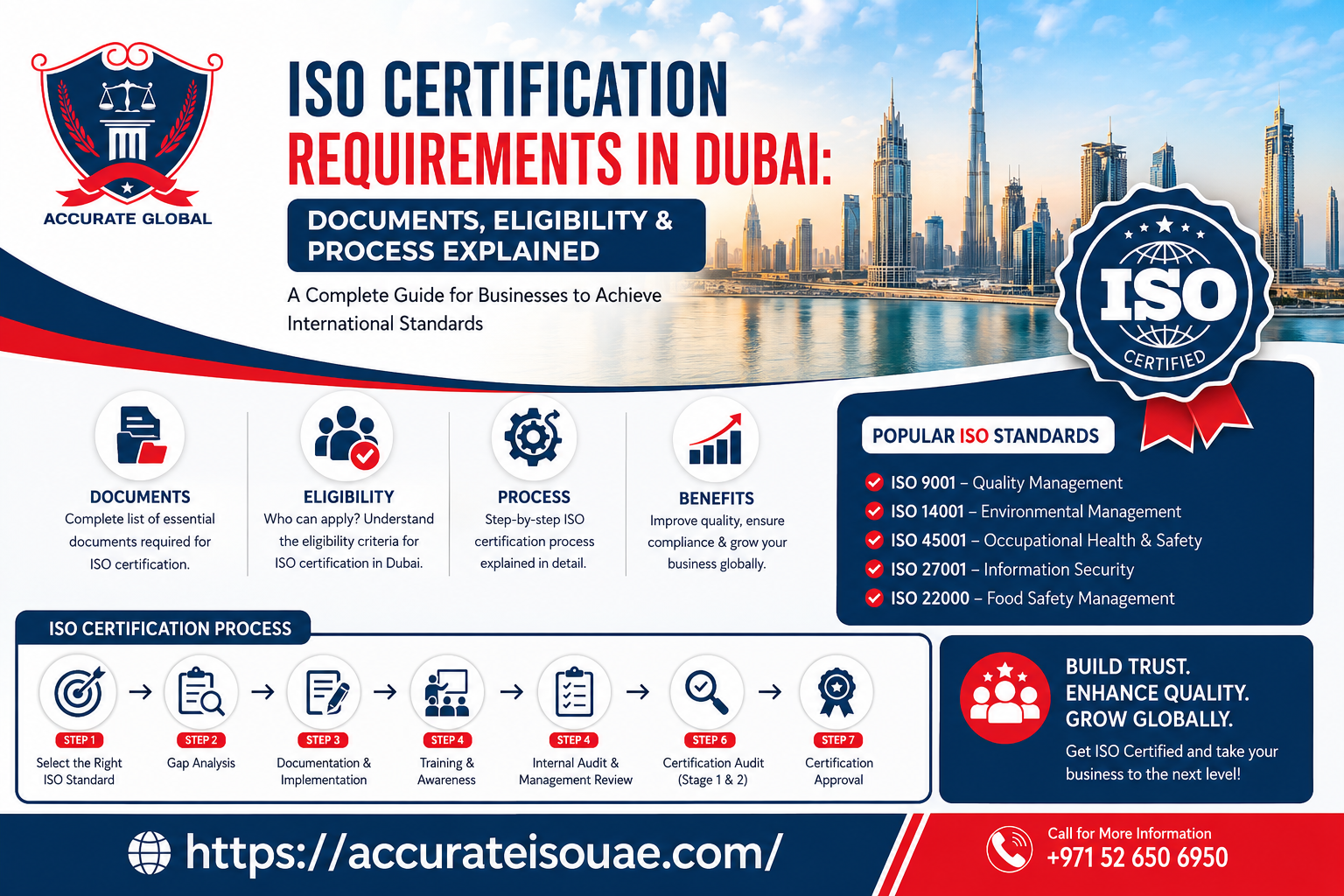
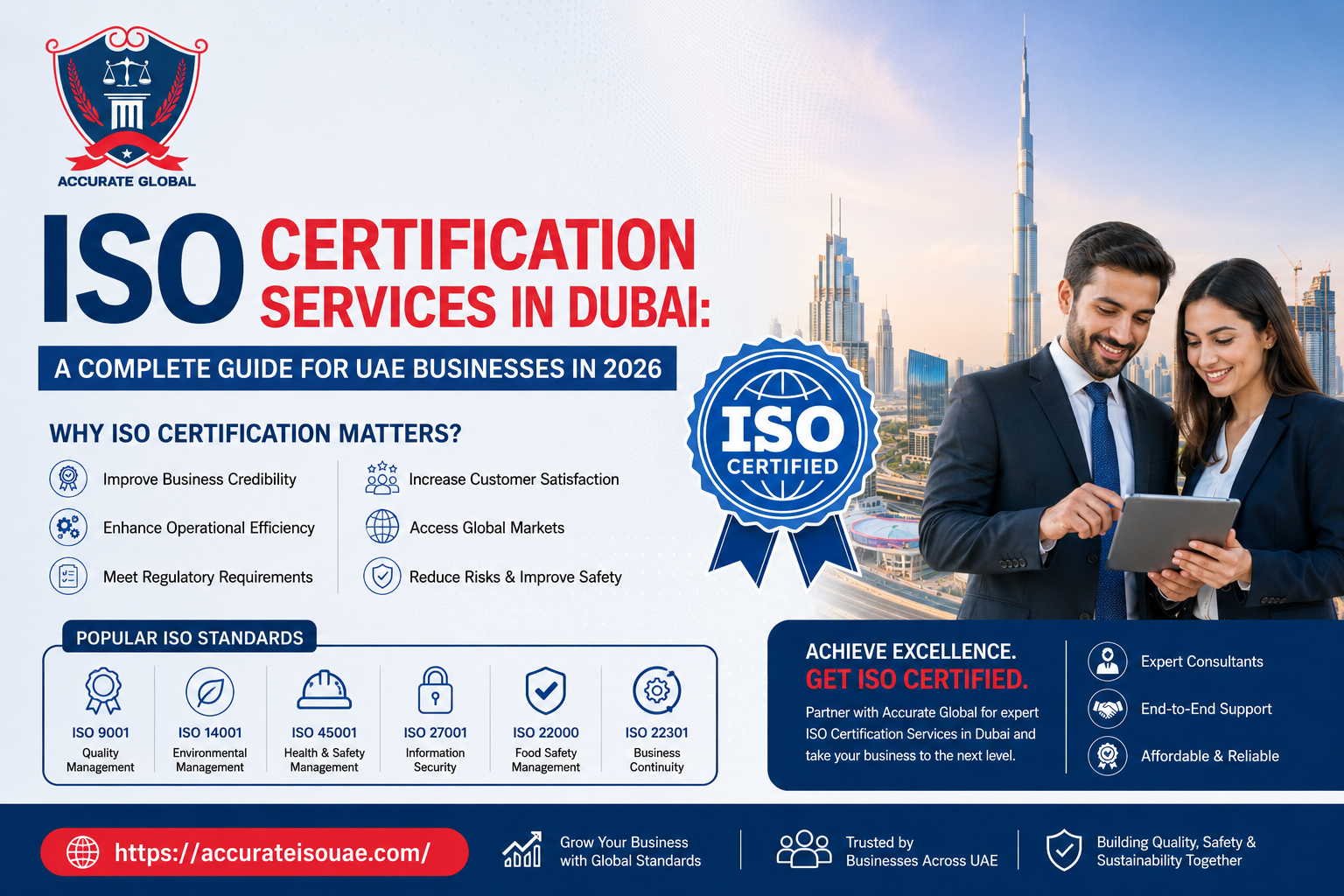
Some of the most popular ISO standards in Dubai include:
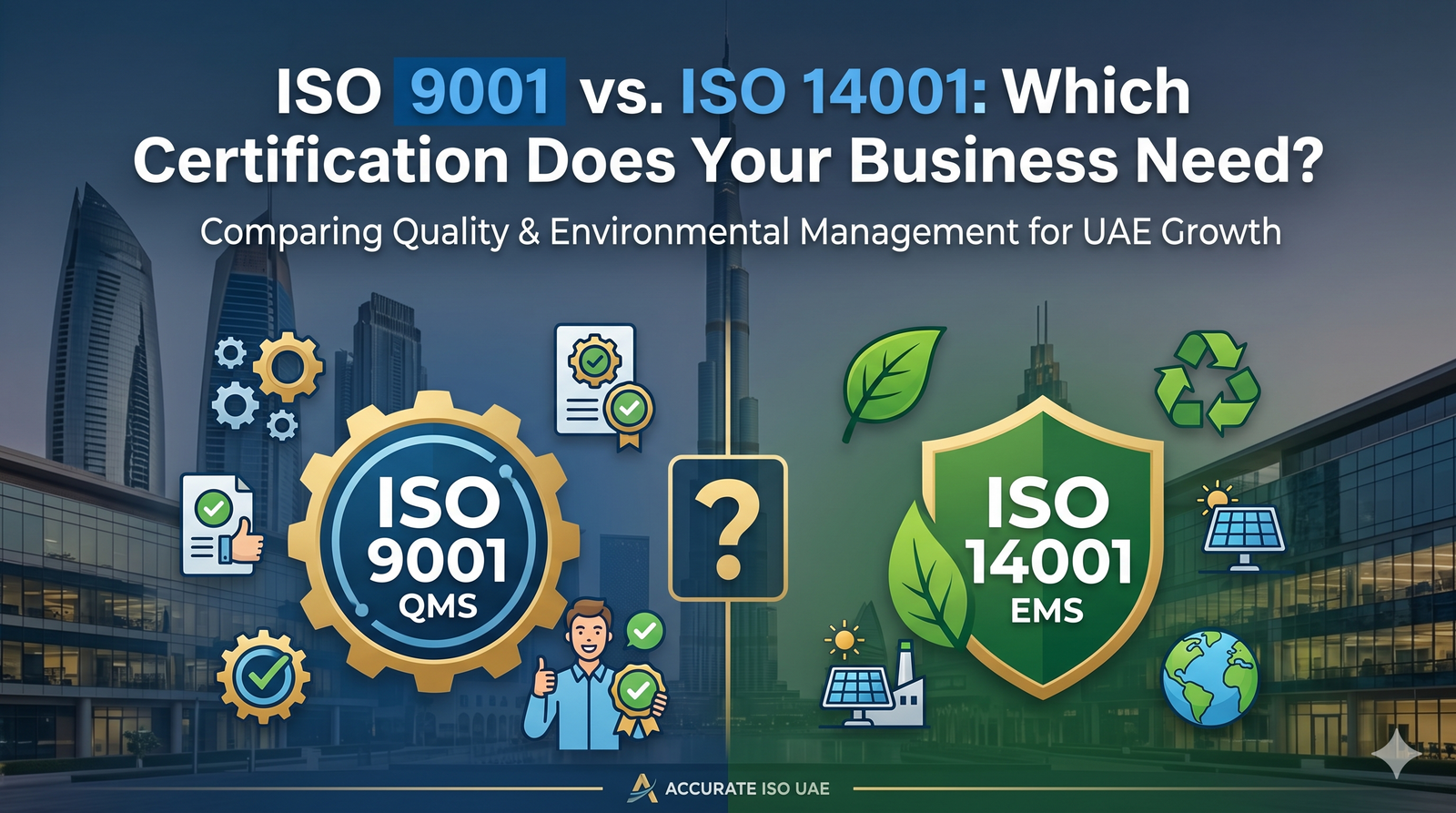
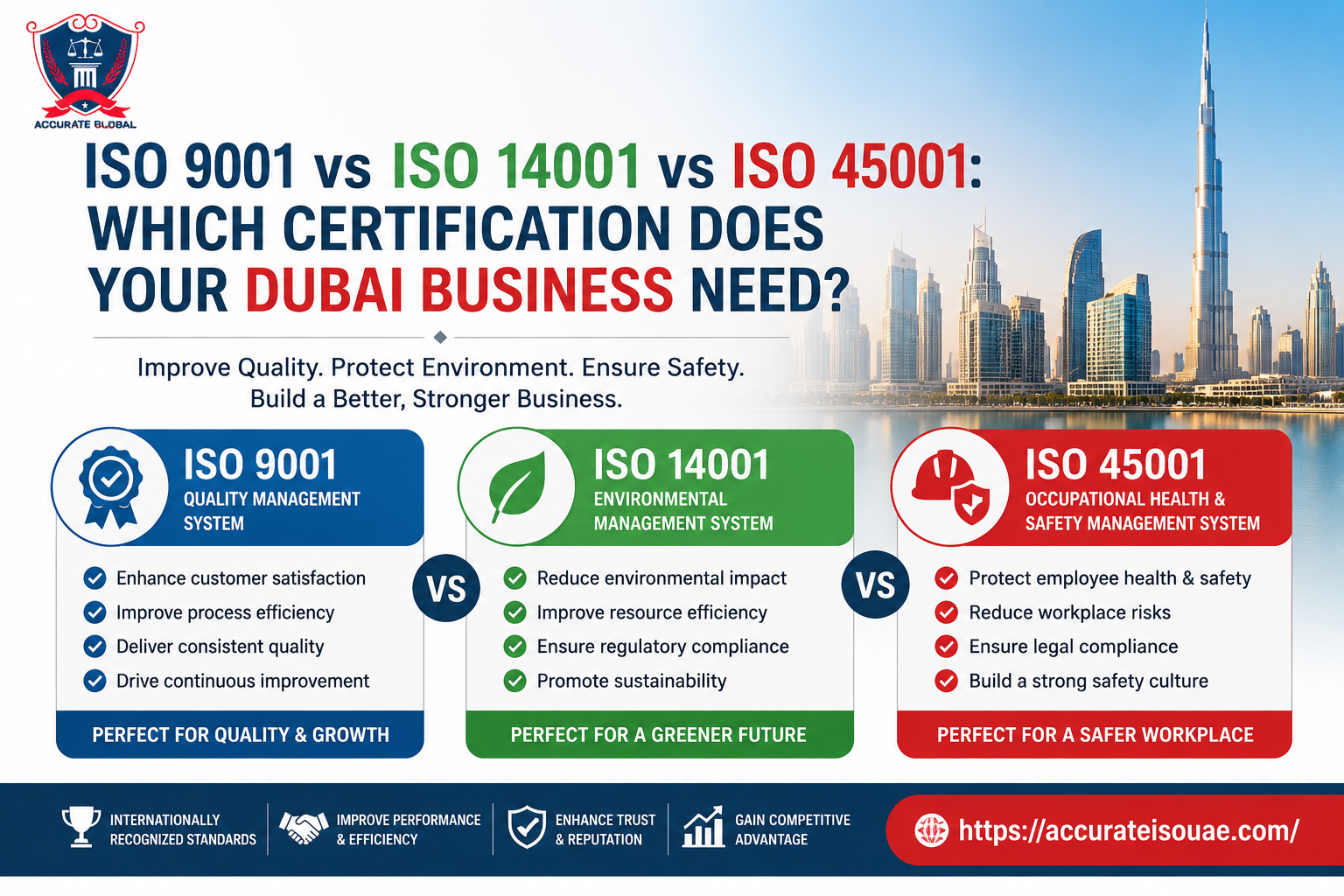
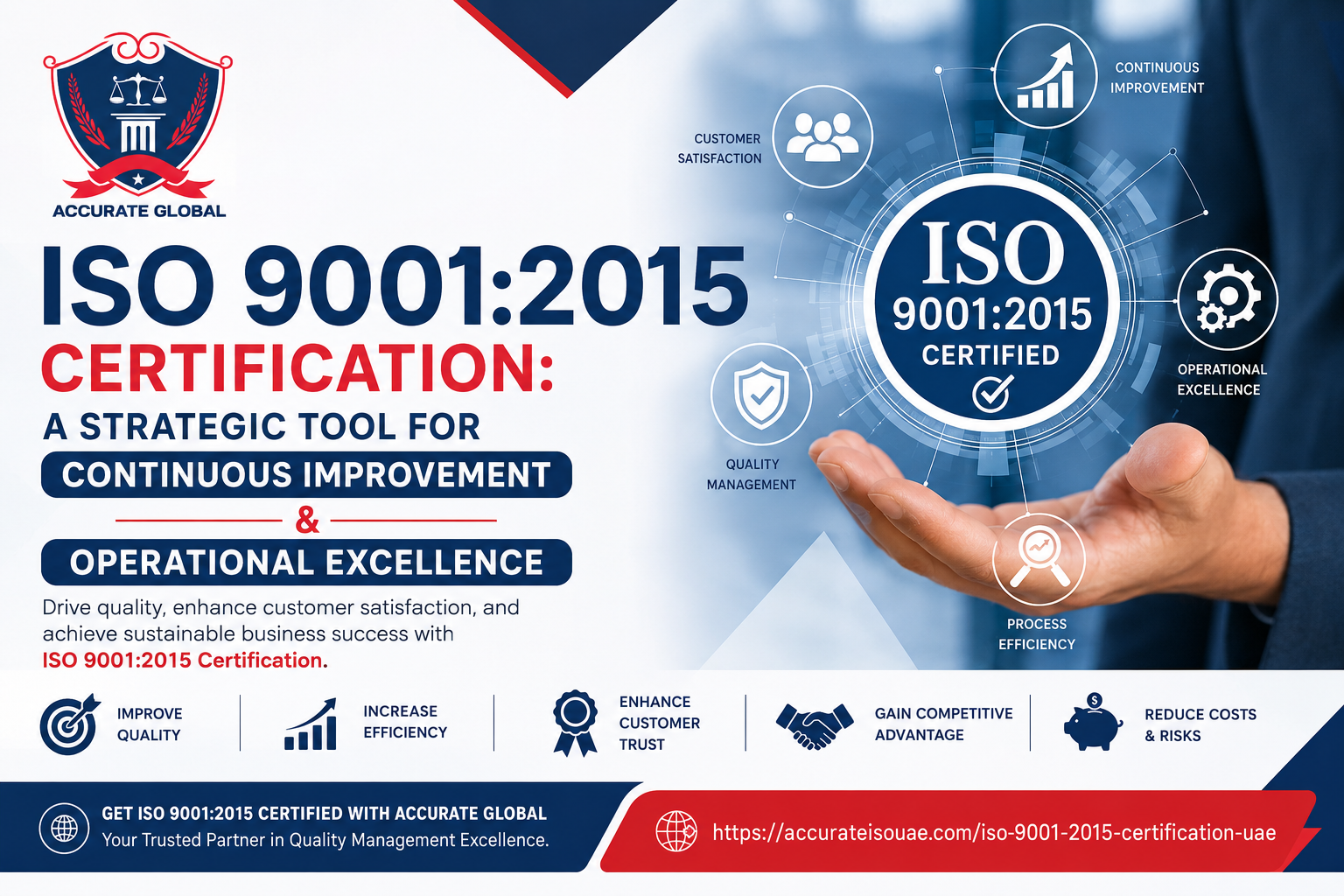
- ISO 9001:2015 – Quality Management System (QMS)
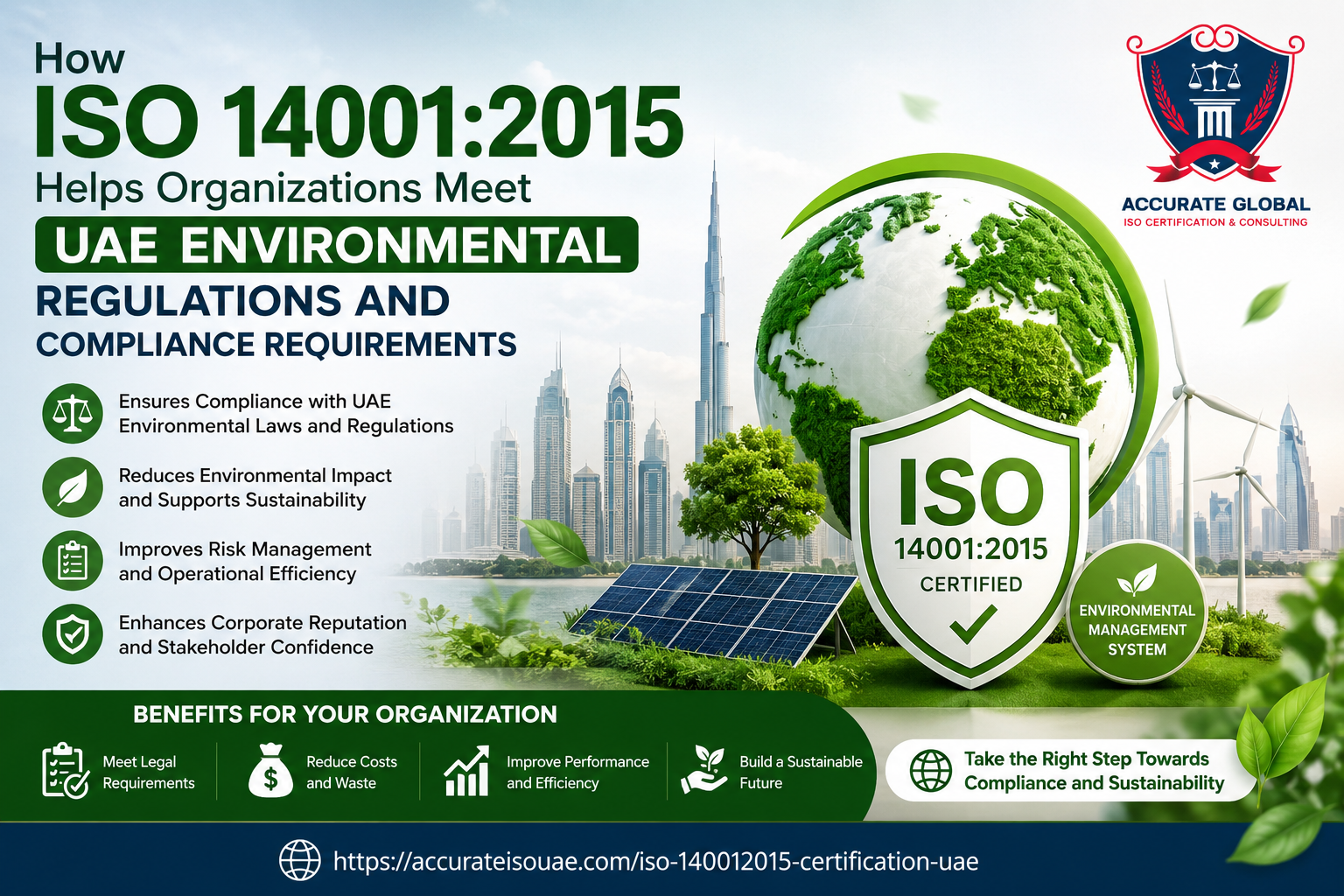
- ISO 14001:2015 – Environmental Management System (EMS)
- ISO 45001:2018 – Occupational Health and Safety Management System
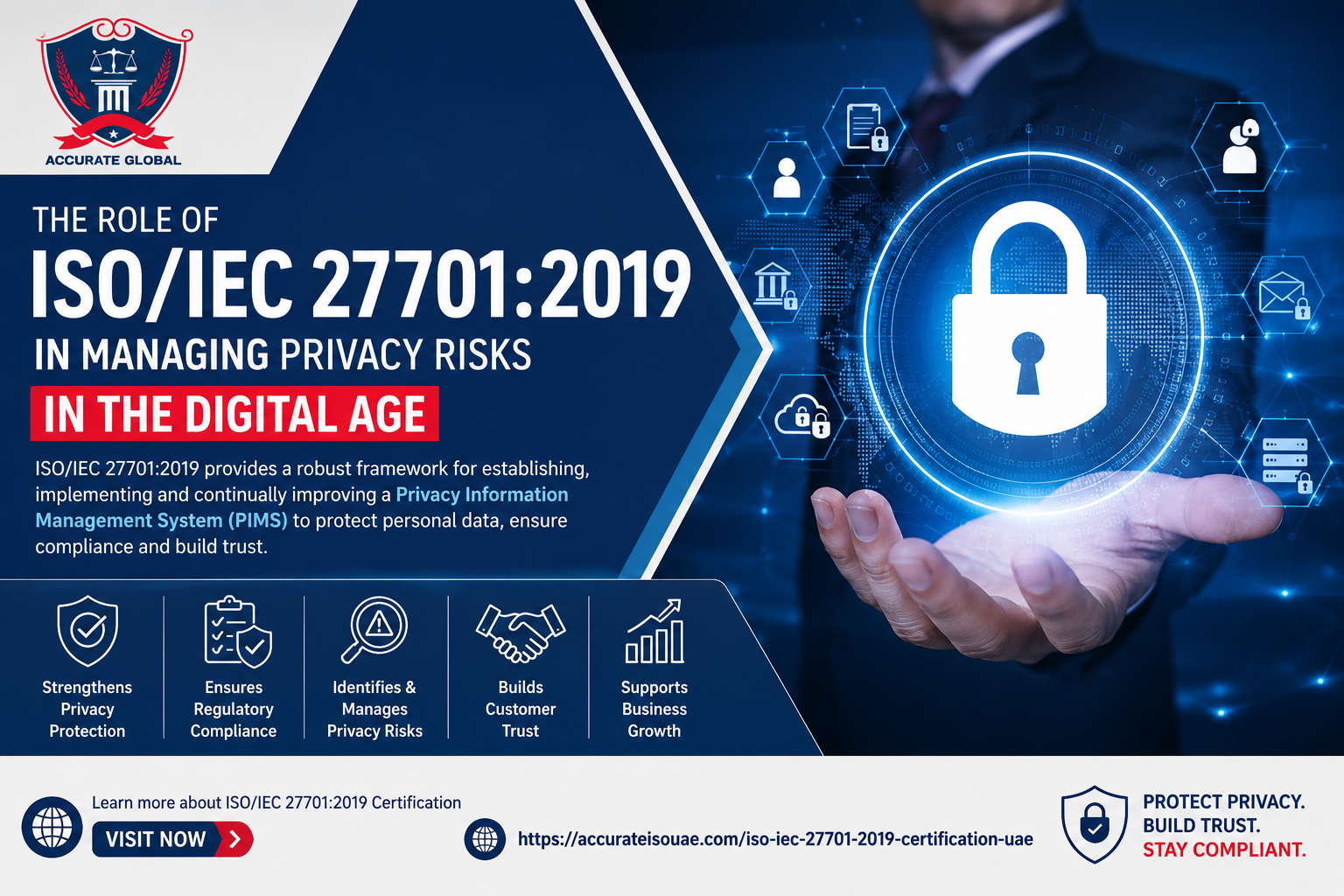
- ISO/IEC 27001:2022 – Information Security Management System (ISMS)
- ISO 22000:2018 – Food Safety Management System
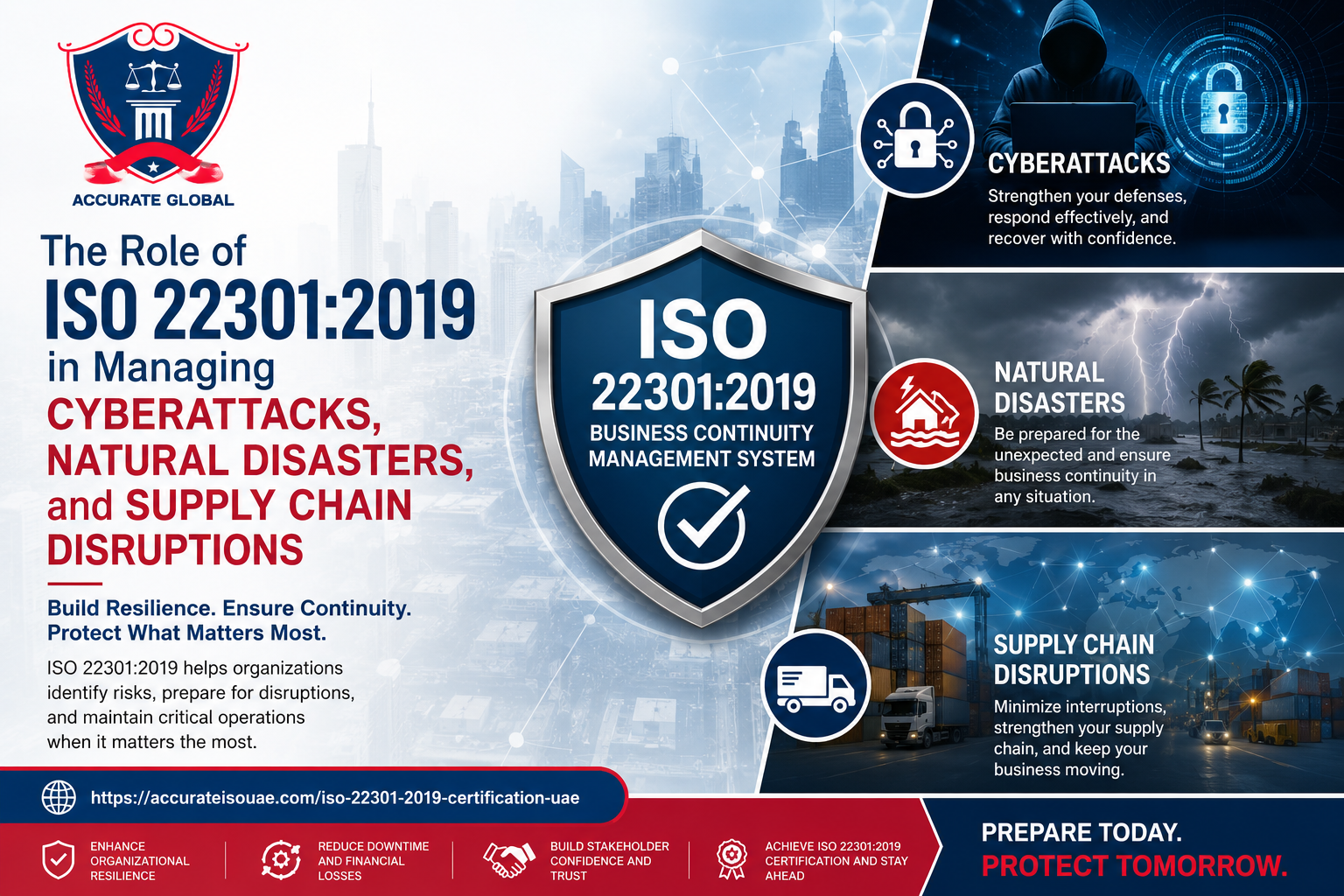
- ISO 22301:2019 – Business Continuity Management System
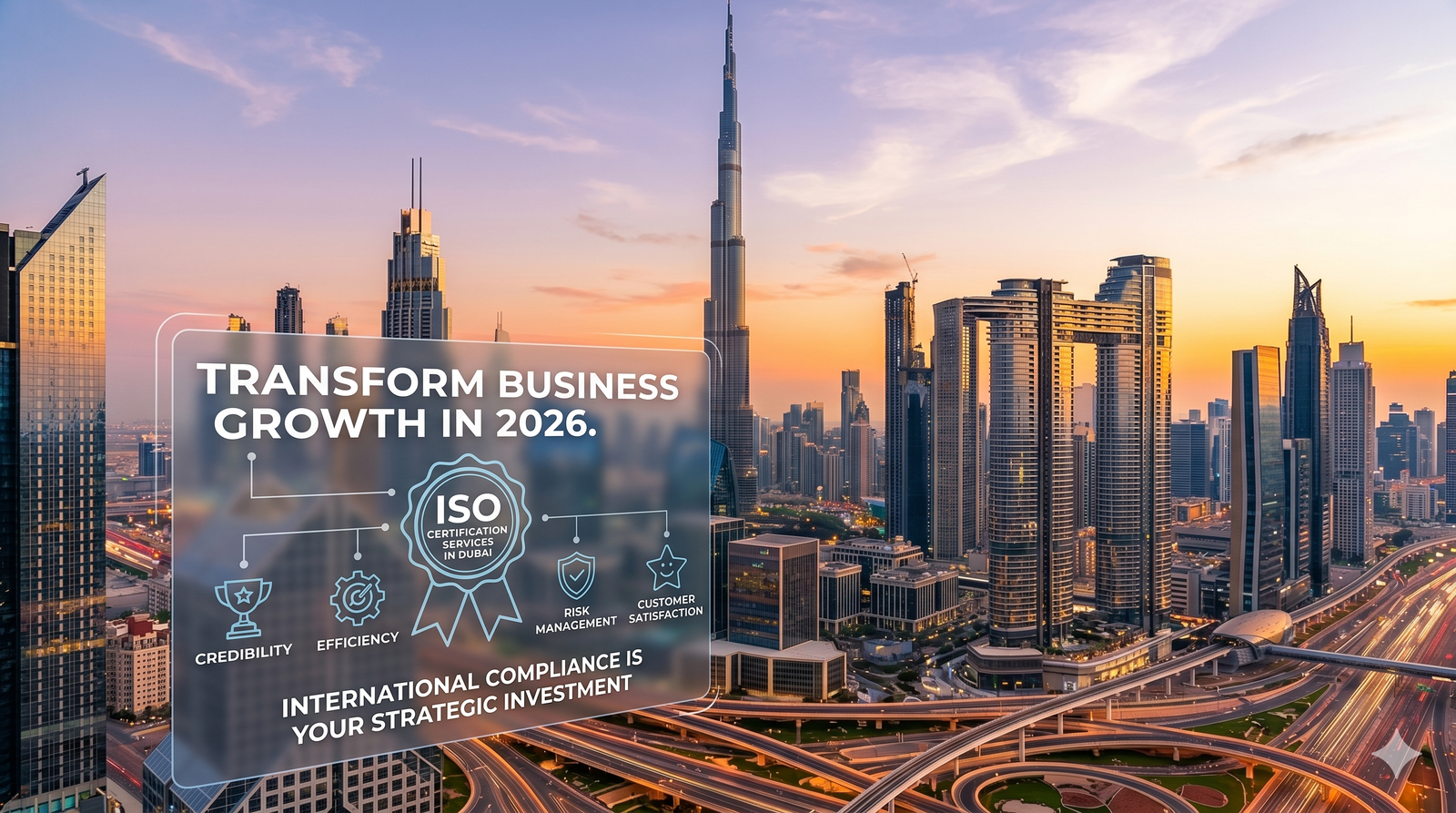
Why Businesses Need ISO Certification in Dubai
Organizations across the UAE pursue ISO certification for several reasons:
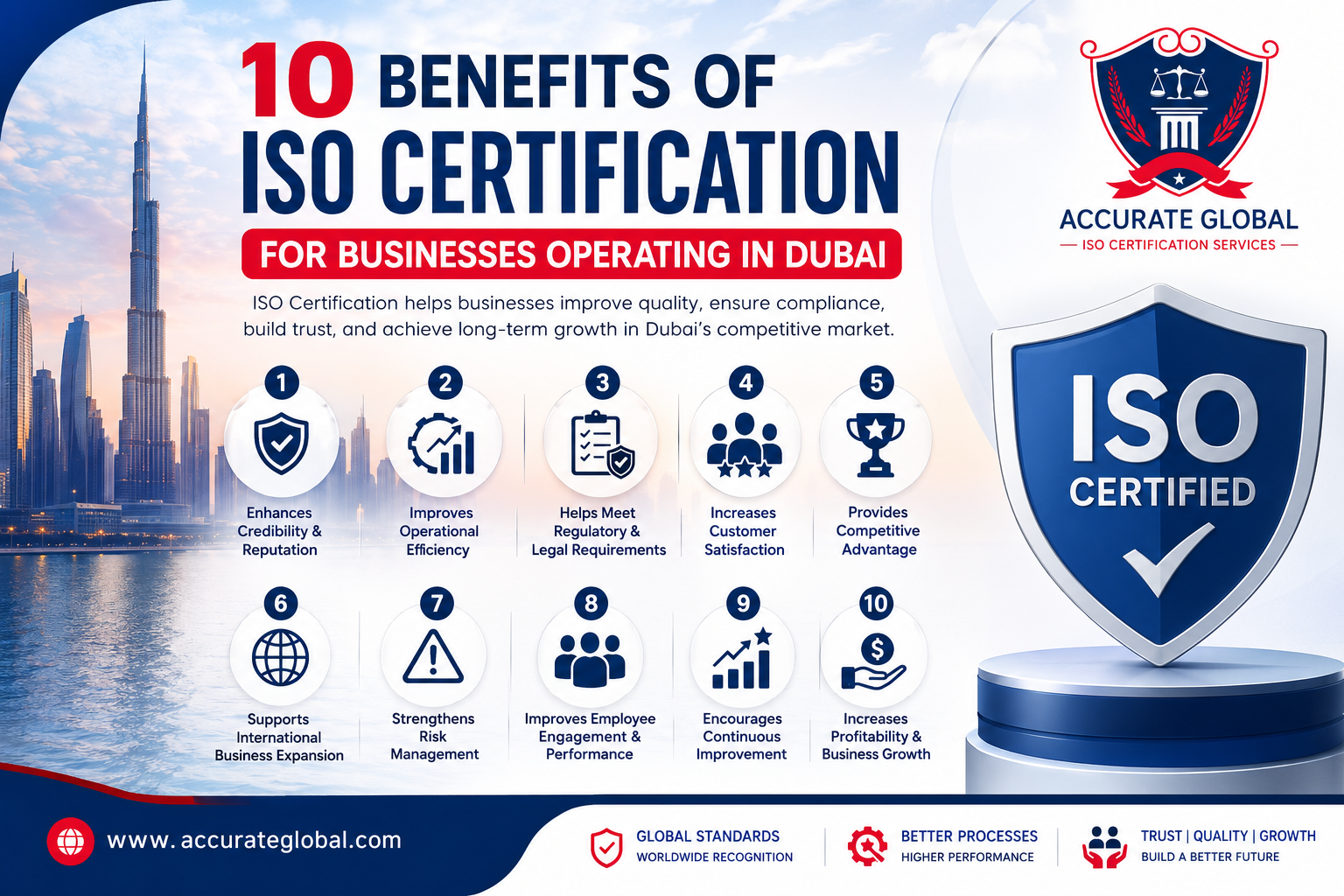
Improved Business Reputation
ISO certification demonstrates professionalism and commitment to international best practices.
Greater Customer Trust
Customers and stakeholders gain confidence when working with certified organizations.
Compliance with Regulations
ISO standards help businesses align with local and international compliance requirements.
Better Operational Efficiency
Organizations can streamline processes, reduce waste, and improve productivity.
Increased Tender Eligibility
Many government projects and corporate contracts require ISO-certified suppliers.
Competitive Advantage
Certification differentiates businesses from competitors and opens new market opportunities.
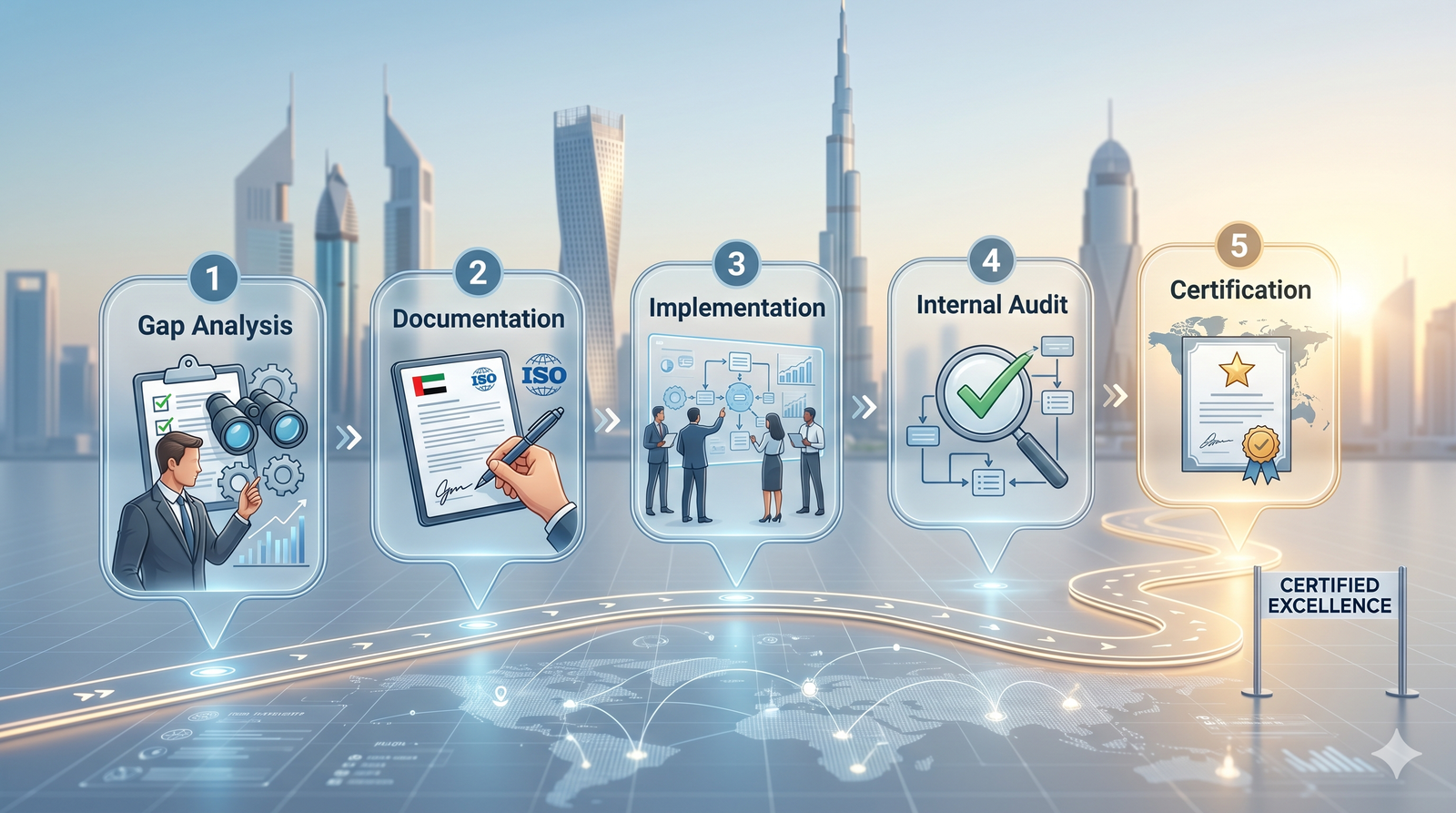
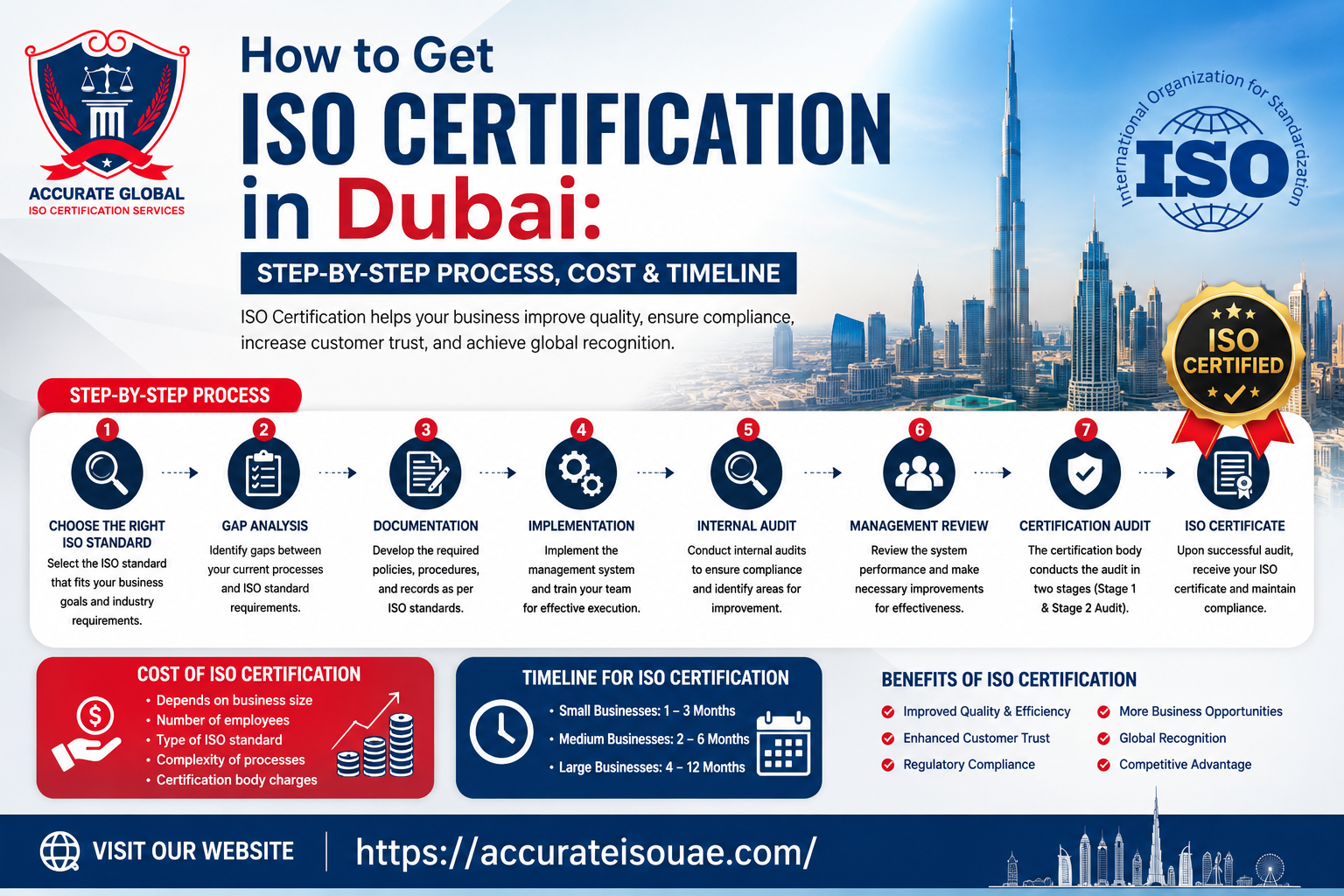
Step-by-Step Process to Get ISO Certification in Dubai
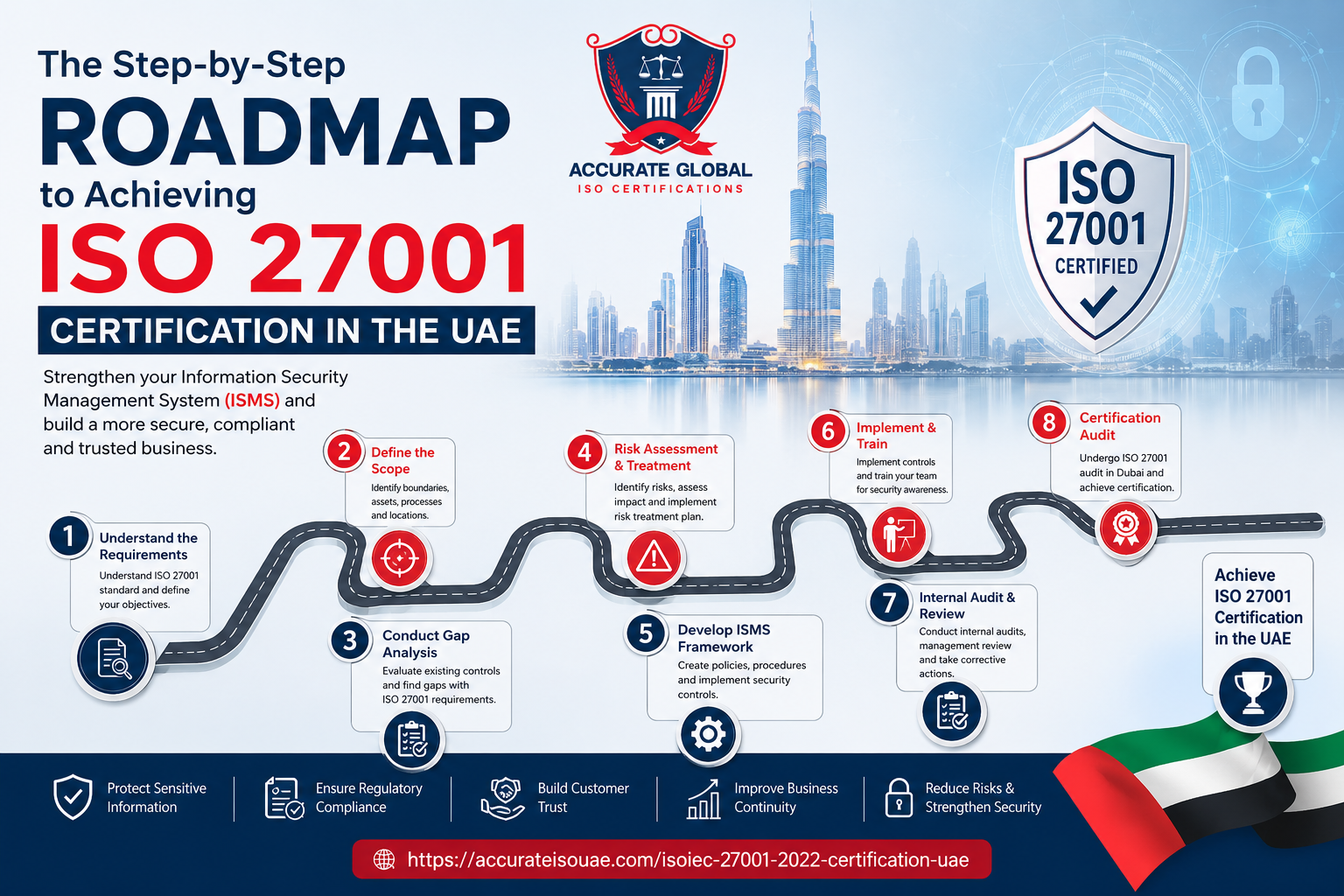
Step 1: Select the Appropriate ISO Standard
The first step is identifying which ISO standard aligns with your business objectives.
For example:
- Quality improvement → ISO 9001
- Information security → ISO 27001
- Environmental sustainability → ISO 14001
- Workplace safety → ISO 45001
Many organizations choose to implement multiple standards simultaneously through an Integrated Management System (IMS).
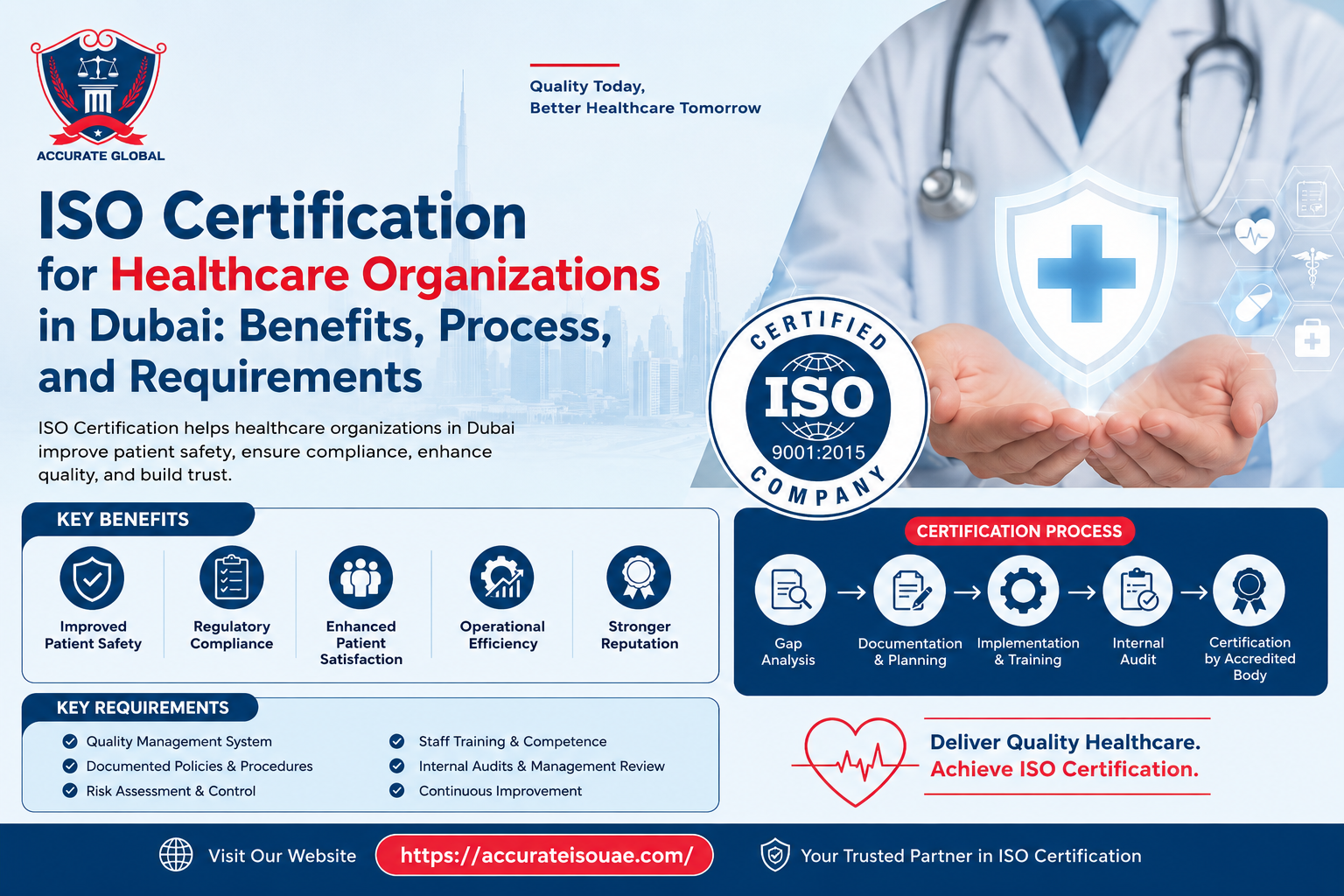
Step 2: Conduct a Gap Analysis
A gap analysis evaluates your current business processes against the requirements of the chosen ISO standard.
The purpose is to identify:
- Existing strengths
- Areas requiring improvement
- Documentation gaps
- Compliance deficiencies
This assessment helps create a clear implementation roadmap.
Step 3: Develop Required Documentation
ISO standards require documented policies, procedures, manuals, and records.
Typical documentation includes:
- Quality manuals
- Standard operating procedures
- Risk assessments
- Policy statements
- Process maps
- Work instructions
Proper documentation forms the foundation of an effective management system.
Step 4: Implement the Management System
After documentation is completed, the organization must implement the system throughout daily operations.
Implementation activities may include:
- Employee training
- Process improvements
- Risk management activities
- Performance monitoring
- Internal communication programs
Successful implementation ensures that ISO requirements become part of normal business operations.
Step 5: Conduct Internal Audits
Internal audits verify whether the implemented management system meets ISO requirements.
The audit helps identify:
- Nonconformities
- Process weaknesses
- Opportunities for improvement
Any issues discovered should be corrected before the certification audit.
Step 6: Management Review
Senior management reviews the effectiveness of the implemented system.
The review typically evaluates:
- Business objectives
- Audit results
- Customer feedback
- Risk performance
- Improvement opportunities
Management commitment is a critical requirement for ISO certification.
Step 7: Certification Audit
An accredited certification body conducts an independent audit in two stages:
Stage 1 Audit
The auditor reviews documentation and readiness for certification.
Stage 2 Audit
The auditor assesses actual implementation and compliance across the organization.
If the organization successfully meets all requirements, certification is recommended.
Step 8: Receive ISO Certificate
After successful completion of the certification audit, the organization receives its ISO certificate.
Most ISO certifications remain valid for three years, subject to annual surveillance audits.
How Much Does ISO Certification Cost in Dubai?
One of the most common questions businesses ask is about the cost of ISO Certification in Dubai.
The total cost depends on several factors:
Organization Size
Larger organizations require more audit time and resources.
Number of Employees
Certification bodies often calculate audit duration based on workforce size.
Complexity of Operations
Organizations with multiple locations or complex processes generally require additional assessment.
Type of ISO Standard
Some standards, such as ISO 27001 and ISO 22000, may require more extensive implementation efforts than ISO 9001.
Consultancy Requirements
Businesses that hire professional ISO consultants may incur additional implementation costs.
Certification Body Fees
Different certification bodies have varying pricing structures.
Typical Cost Range
For many SMEs in Dubai, ISO certification projects generally range from a few thousand to several tens of thousands of UAE Dirhams depending on scope, complexity, and certification requirements.
The most accurate approach is to request a customized quotation based on your organization's specific needs.
How Long Does It Take to Get ISO Certification in Dubai?
The timeline for obtaining ISO Certification in Dubai depends on business readiness and organizational complexity.
Small Businesses
Typical timeframe: 1–3 months
Medium-Sized Companies
Typical timeframe: 2–6 months
Large Organizations
Typical timeframe: 4–12 months
Factors that affect certification timelines include:
- Existing management systems
- Employee involvement
- Documentation readiness
- Internal resource availability
- Number of locations
- Complexity of operations
Organizations that work with experienced ISO consultants often complete certification more efficiently.
Common Challenges During ISO Certification
Many organizations encounter challenges during implementation, including:
Lack of Employee Awareness
Employees may initially resist new processes and documentation requirements.
Inadequate Documentation
Poorly maintained records can delay certification.
Limited Management Commitment
Successful implementation requires active support from leadership.
Resource Constraints
Some organizations struggle to dedicate sufficient time and personnel to the project.
Professional guidance can help overcome these challenges and streamline certification efforts.
Tips for Successful ISO Certification
To maximize success:
- Select the right ISO standard for your business goals
- Engage leadership throughout the process
- Train employees effectively
- Maintain accurate documentation
- Conduct regular internal audits
- Address nonconformities promptly
- Partner with experienced ISO consultants
These practices improve certification outcomes and long-term business performance.
Conclusion
Obtaining ISO Certification in Dubai is a valuable investment for organizations seeking operational excellence, regulatory compliance, and enhanced market credibility. By following a structured certification process—from gap analysis and documentation to implementation and certification audits—businesses can achieve internationally recognized standards that support growth and customer confidence.
While certification costs and timelines vary depending on organizational size and complexity, the long-term benefits often outweigh the investment. As Dubai continues to strengthen its position as a leading global business destination, ISO certification remains one of the most effective tools for demonstrating quality, reliability, and commitment to continuous improvement.
.png)
.png)
.png)
.png)
.png)
.png)
.png)