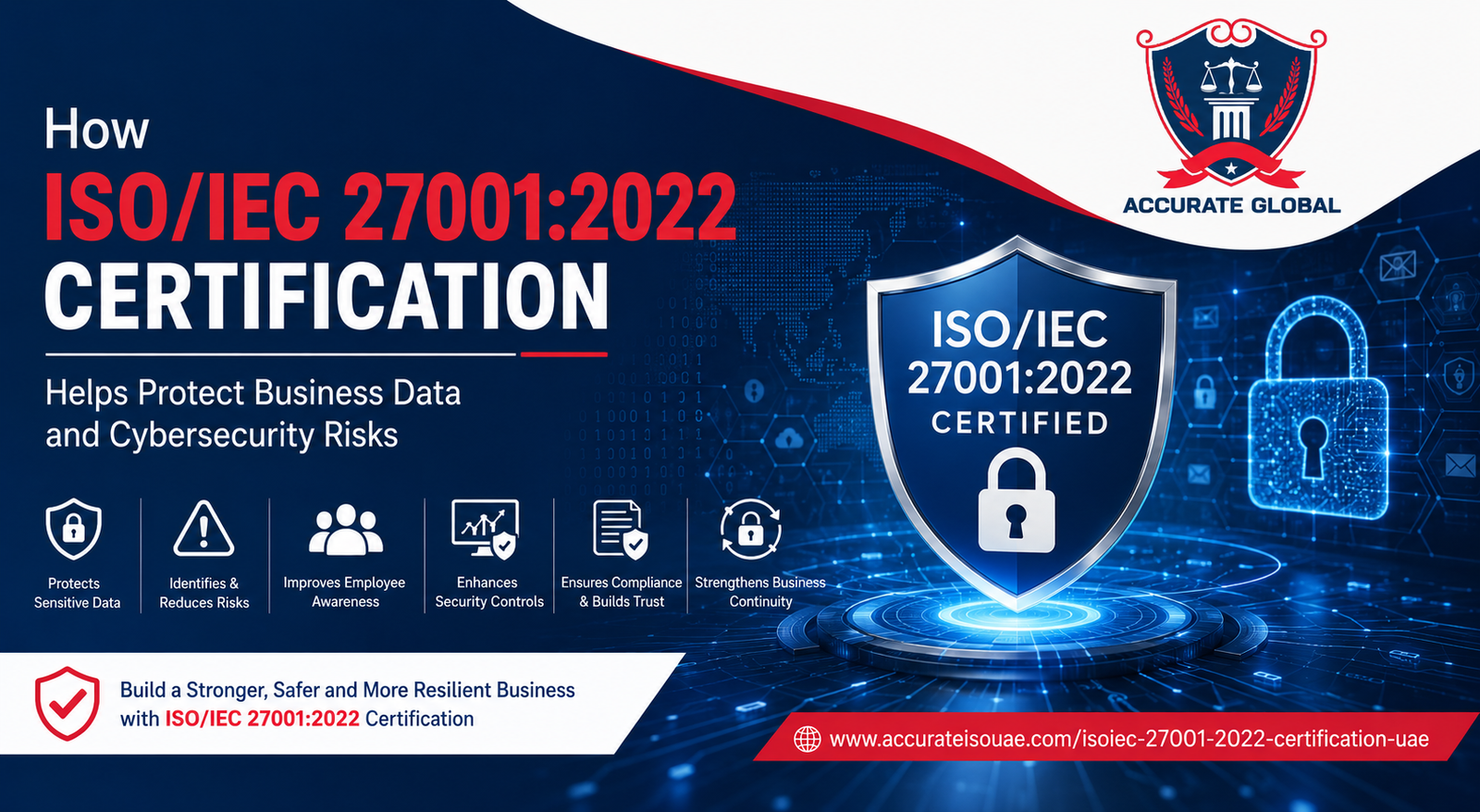
How ISO/IEC 27001:2022 Certification Helps Protect Business Data and Cybersecurity Risks
In today’s digital world, businesses are increasingly dependent on technology, cloud storage, online transactions, and digital communication. While these advancements improve efficiency and productivity, they also expose organizations to serious cybersecurity threats such as data breaches, ransomware attacks, phishing scams, and unauthorized access. Protecting sensitive business information has become a top priority for companies across all industries.
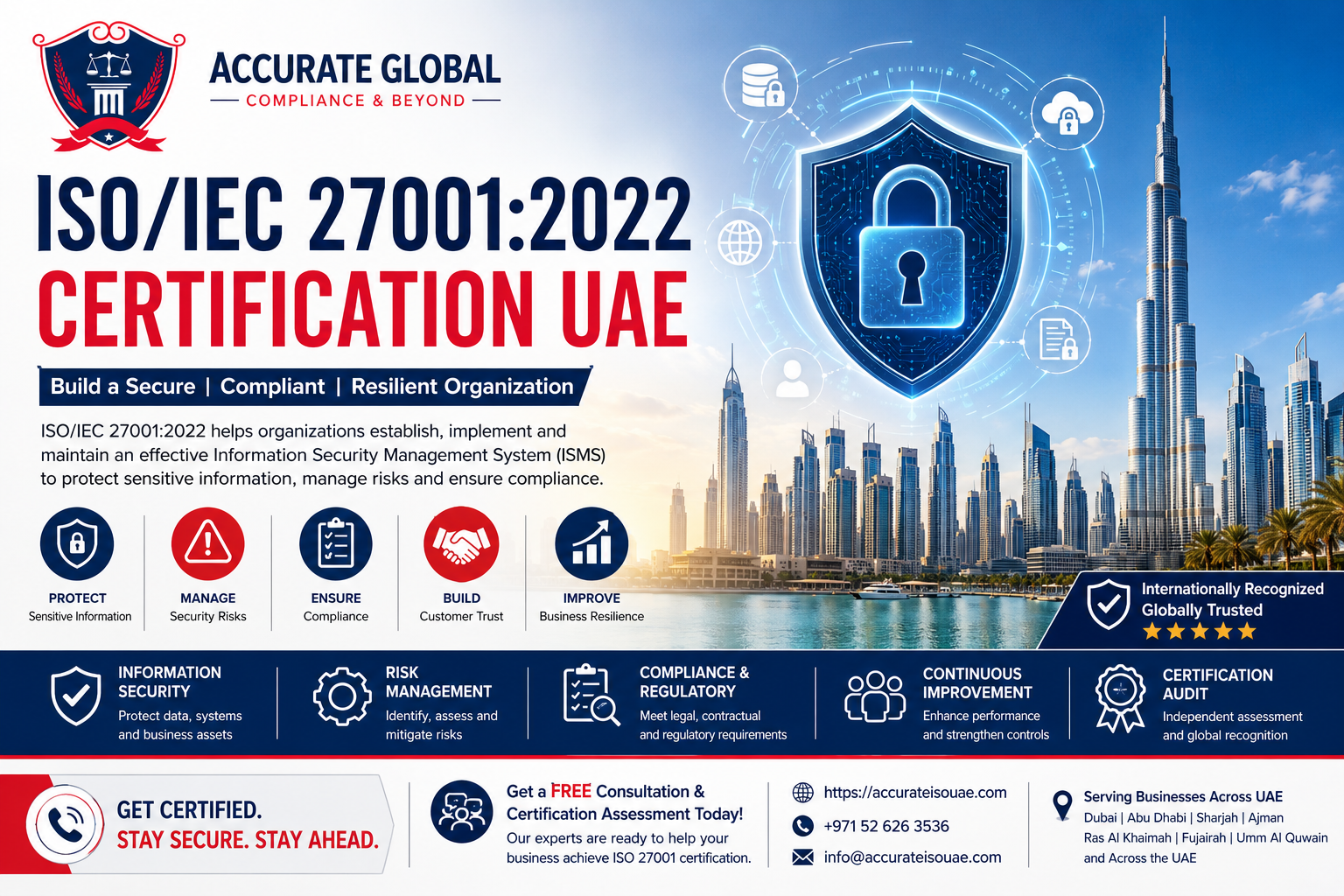
This is where ISO/IEC 27001:2022 Certification plays a crucial role. It is an internationally recognized standard designed to help organizations establish, implement, maintain, and continually improve an Information Security Management System (ISMS). By adopting this certification, businesses can strengthen data protection, minimize cybersecurity risks, and build trust with customers and stakeholders.
What is ISO/IEC 27001:2022 Certification?
ISO/IEC 27001:2022 is the latest version of the globally accepted information security standard developed by the International Organization for Standardization (ISO) and the International Electrotechnical Commission (IEC). The standard provides a structured framework for identifying security risks and implementing effective controls to protect confidential business information.
The certification focuses on safeguarding three critical aspects of information security:
- Confidentiality – Ensuring that information is accessible only to authorized individuals.
- Integrity – Protecting data from unauthorized modifications or corruption.
- Availability – Ensuring that systems and information remain accessible when needed.
Organizations that achieve ISO/IEC 27001:2022 certification demonstrate their commitment to maintaining high standards of information security and cybersecurity management.
Importance of Data Protection and Cybersecurity
Businesses today handle large amounts of sensitive information, including customer records, financial details, employee information, intellectual property, and confidential business strategies. A single cyberattack or data breach can lead to:
- Financial losses
- Legal penalties
- Reputation damage
- Loss of customer trust
- Operational disruptions
Cybercriminals are constantly developing new methods to exploit security weaknesses. Therefore, organizations need a proactive and systematic approach to information security. ISO/IEC 27001:2022 helps businesses reduce vulnerabilities and improve resilience against cyber threats.
How ISO/IEC 27001:2022 Helps Protect Business Data
1. Identifies and Manages Security Risks
One of the major advantages of ISO/IEC 27001:2022 is its risk-based approach. The certification requires organizations to identify potential security threats, assess vulnerabilities, and implement controls to minimize risks.
Businesses can evaluate:
- Internal and external threats
- Weaknesses in IT systems
- Human-related security risks
- Data handling procedures
- Third-party security concerns
This process helps organizations take preventive measures before security incidents occur.
2. Strengthens Access Control
Unauthorized access to sensitive data is one of the most common causes of data breaches. ISO/IEC 27001:2022 helps organizations establish strict access control policies to ensure that only authorized personnel can access critical information.
Common access control measures include:
- User authentication systems
- Password management policies
- Multi-factor authentication
- Role-based access permissions
- Monitoring and logging activities
These controls significantly reduce the chances of unauthorized access and insider threats.
3. Improves Employee Awareness and Training
Human error is one of the leading causes of cybersecurity incidents. Employees may unknowingly click malicious links, share sensitive information, or fail to follow security procedures.
ISO/IEC 27001:2022 emphasizes employee awareness and training programs to ensure staff understand cybersecurity best practices. Regular training helps employees:
- Recognize phishing attacks
- Handle confidential information securely
- Follow password security guidelines
- Report suspicious activities promptly
A well-trained workforce strengthens the organization’s overall security posture.
4. Enhances Incident Response and Recovery
Cybersecurity incidents can occur even with strong preventive measures. ISO/IEC 27001:2022 requires organizations to establish incident management and response procedures to quickly detect, respond to, and recover from security breaches.
This includes:
- Incident reporting systems
- Emergency response plans
- Data backup procedures
- Disaster recovery planning
- Continuous monitoring and improvement
Effective incident response minimizes downtime and reduces the impact of cyberattacks on business operations.
5. Ensures Compliance with Legal and Regulatory Requirements
Many industries are subject to strict data protection and privacy regulations. Failure to comply can result in heavy penalties and legal consequences.
ISO/IEC 27001:2022 helps organizations align with various legal and regulatory requirements related to information security and data protection. Compliance demonstrates that the organization follows internationally recognized security standards and best practices.
This is especially important for businesses operating in sectors such as:
- Banking and finance
- Healthcare
- Information technology
- Telecommunications
- E-commerce
- Government services
6. Builds Customer Trust and Business Reputation
Customers and business partners want assurance that their information is protected. Achieving ISO/IEC 27001:2022 certification demonstrates a company’s commitment to safeguarding sensitive data and maintaining strong cybersecurity practices.
This certification can improve:
- Customer confidence
- Brand reputation
- Business credibility
- Competitive advantage
Organizations with certified information security systems are often preferred by clients, especially when handling confidential or sensitive data.
7. Supports Business Continuity
Cyberattacks and data breaches can disrupt daily operations and cause significant financial losses. ISO/IEC 27001:2022 helps businesses establish business continuity plans to ensure critical operations continue during security incidents or emergencies.
By implementing strong backup systems, recovery plans, and security monitoring, businesses can maintain operational stability and minimize disruptions.
Industries That Benefit from ISO/IEC 27001:2022 Certification
Almost every industry can benefit from improved information security management. However, the certification is particularly valuable for organizations that handle sensitive customer or business data, including:
- IT and software companies
- Financial institutions
- Healthcare providers
- Educational institutions
- Government agencies
- Manufacturing companies
- Cloud service providers
- E-commerce businesses
As cyber threats continue to evolve, organizations across all sectors are increasingly adopting ISO/IEC 27001:2022 certification to strengthen cybersecurity defenses.
Conclusion
Cybersecurity threats and data breaches are becoming more sophisticated and frequent in today’s digital environment. Businesses must take proactive steps to protect sensitive information, maintain customer trust, and ensure operational continuity.
ISO/IEC 27001:2022 Certification provides a comprehensive framework for managing information security risks and strengthening cybersecurity systems. From risk assessment and access control to employee training and incident response, the certification helps organizations build a secure and resilient business environment.
By implementing ISO/IEC 27001:2022, businesses can not only protect valuable data but also gain a competitive advantage, improve compliance, and enhance customer confidence. Investing in information security is no longer optional—it is essential for long-term business success in the modern digital landscape.




.png)

.png)

.png)
.png)


.png)
.png)
.png)