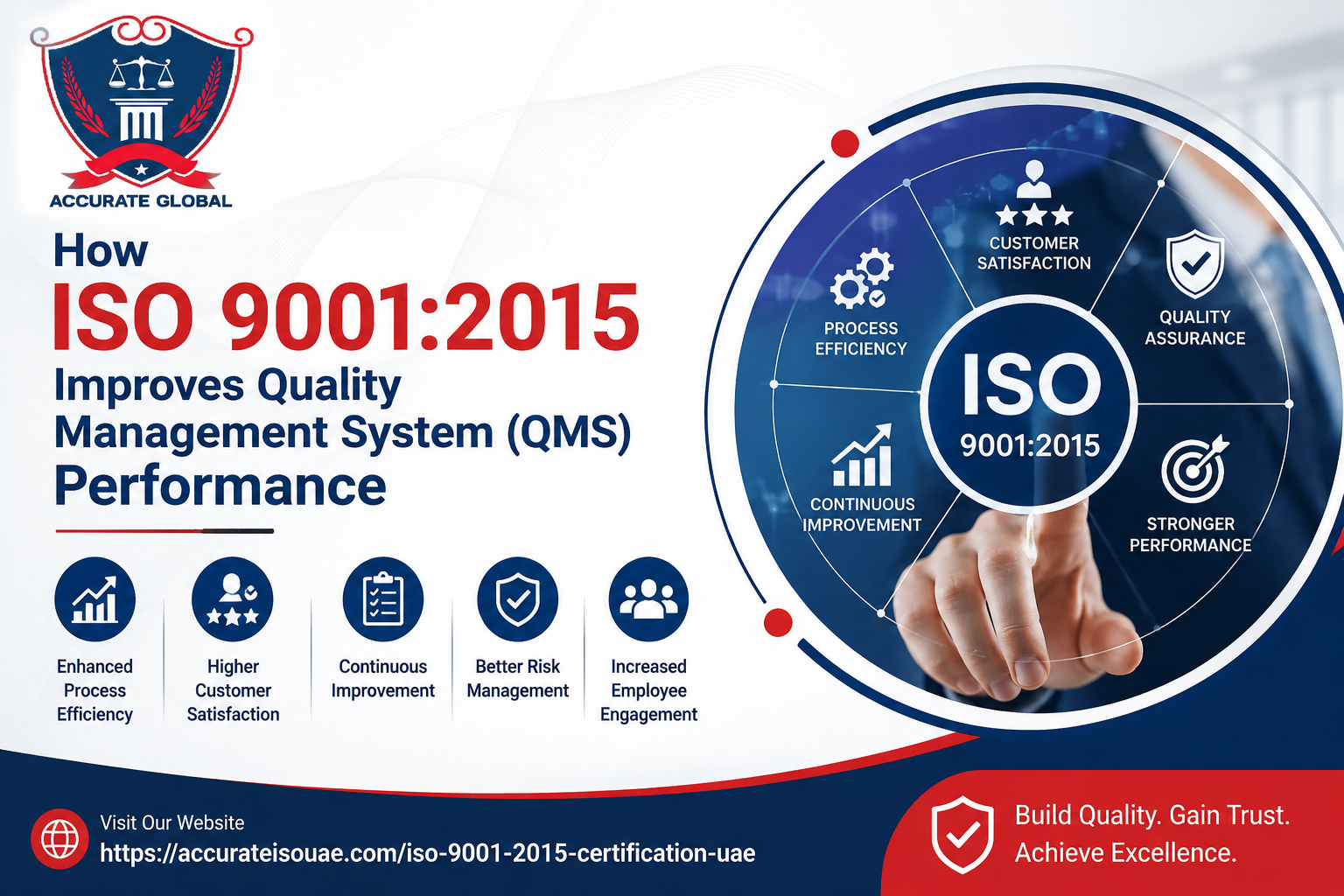
How ISO 9001:2015 Improves Quality Management System (QMS) Performance
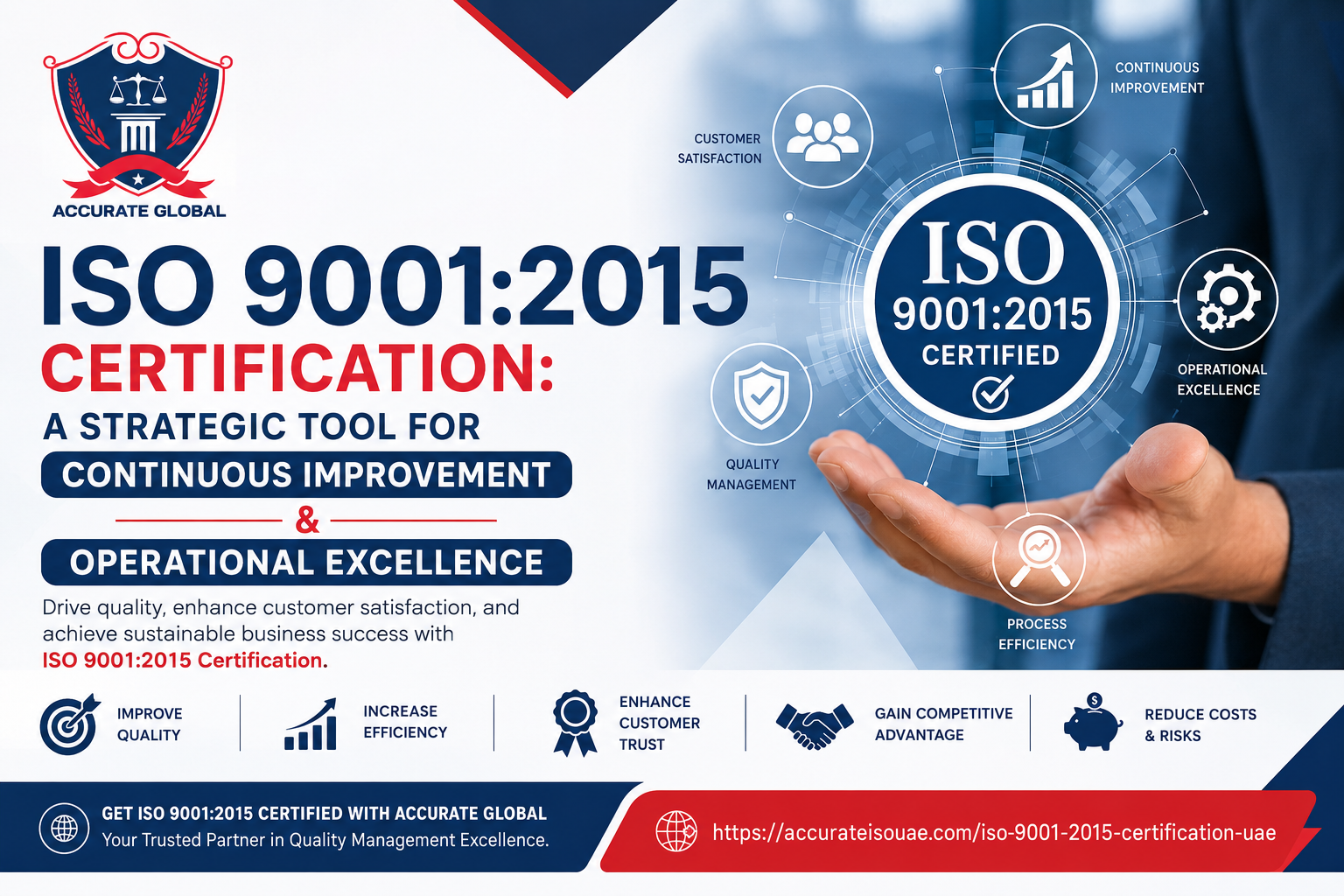
In today’s competitive business environment, organizations must consistently deliver high-quality products and services to maintain customer trust and achieve long-term success. One of the most effective ways to ensure quality and continuous improvement is by implementing ISO 9001:2015 – Quality Management System (QMS) standards. This globally recognized certification framework helps businesses streamline operations, improve efficiency, and enhance customer satisfaction.
Whether you operate a manufacturing company, service organization, educational institution, or healthcare business, ISO 9001:2015 provides a structured approach to quality management that can significantly improve overall business performance.
What is ISO 9001:2015?
QMS=Customer Satisfaction+Continuous Improvement+Process EfficiencyQMS = Customer\ Satisfaction + Continuous\ Improvement + Process\ EfficiencyQMS=Customer Satisfaction+Continuous Improvement+Process Efficiency
ISO 9001:2015 is an international standard developed by the International Organization for Standardization for establishing, implementing, maintaining, and continually improving a Quality Management System (QMS). It focuses on meeting customer requirements while ensuring consistent quality across all business processes.
The 2015 version emphasizes:
- Risk-based thinking
- Leadership involvement
- Process improvement
- Customer satisfaction
- Performance evaluation
Organizations certified under ISO 9001:2015 demonstrate their commitment to quality, consistency, and operational excellence.
Importance of Quality Management System (QMS)
A Quality Management System (QMS) is a structured system of policies, procedures, and processes that organizations use to ensure products and services meet customer expectations and regulatory requirements.
An effective QMS helps businesses:
- Reduce operational errors
- Improve product consistency
- Enhance customer confidence
- Increase employee productivity
- Achieve continuous improvement
ISO 9001:2015 acts as a strong foundation for building and maintaining an efficient QMS.
How ISO 9001:2015 Improves QMS Performance
1. Enhances Process Efficiency
One of the key benefits of ISO 9001:2015 is improved process management. The standard encourages businesses to identify, monitor, and optimize their workflows for better efficiency.
Organizations can:
- Eliminate unnecessary activities
- Reduce process delays
- Improve resource utilization
- Minimize operational costs
By standardizing procedures, businesses can ensure smoother operations and consistent performance across departments.
2. Increases Customer Satisfaction
Customer satisfaction is at the core of ISO 9001:2015. The standard requires organizations to understand customer needs, monitor feedback, and continuously improve services.
Businesses that implement ISO 9001:2015 often experience:
- Better customer communication
- Faster issue resolution
- Higher product reliability
- Improved service quality
Satisfied customers are more likely to remain loyal and recommend the business to others, resulting in long-term growth.
3. Encourages Continuous Improvement
Continuous Improvement=Current Performance+Corrective Actions+Preventive ActionsContinuous\ Improvement = Current\ Performance + Corrective\ Actions + Preventive\ ActionsContinuous Improvement=Current Performance+Corrective Actions+Preventive Actions
Continuous improvement is a major principle of ISO 9001:2015. Organizations are encouraged to regularly analyze their performance, identify weaknesses, and implement corrective actions.
This proactive approach helps businesses:
- Prevent recurring problems
- Improve operational performance
- Adapt to market changes
- Maintain competitive advantage
The “Plan-Do-Check-Act” (PDCA) cycle used in ISO 9001:2015 supports ongoing quality enhancement.
4. Improves Risk Management
ISO 9001:2015 introduced risk-based thinking as a core requirement. Organizations must identify potential risks and opportunities that could impact quality performance.
Effective risk management helps businesses:
- Reduce unexpected failures
- Improve decision-making
- Enhance business continuity
- Protect customer interests
By addressing risks early, companies can avoid costly mistakes and operational disruptions.
5. Strengthens Employee Engagement
Employees play an important role in maintaining quality standards. ISO 9001:2015 promotes leadership involvement and employee participation in organizational processes.
Benefits include:
- Clear roles and responsibilities
- Better communication
- Increased accountability
- Improved employee motivation
When employees understand quality objectives and contribute to improvement efforts, overall productivity increases significantly.
6. Supports Better Decision-Making
ISO 9001:2015 encourages evidence-based decision-making through proper data collection and analysis.
Organizations can use performance data to:
- Identify trends
- Measure process effectiveness
- Improve strategic planning
- Optimize business operations
Accurate information allows management to make informed decisions that support business growth and quality improvement.
7. Enhances Business Credibility
ISO 9001:2015 certification is recognized worldwide and demonstrates a company’s commitment to quality and professionalism.
Certified organizations often gain:
- Increased customer trust
- Better market reputation
- More business opportunities
- Competitive advantage in tenders and contracts
Many clients and government agencies prefer working with ISO-certified businesses because of their reliable quality systems.
8. Improves Regulatory Compliance
Compliance with industry regulations and legal requirements is essential for every organization. ISO 9001:2015 helps businesses establish proper documentation and control systems to ensure compliance.
This reduces the risk of:
- Legal penalties
- Non-compliance issues
- Product recalls
- Customer complaints
A well-managed QMS ensures organizations consistently meet both customer and regulatory expectations.
Key Principles of ISO 9001:2015
The ISO 9001:2015 standard is based on several quality management principles, including:
- Customer focus
- Leadership
- Engagement of people
- Process approach
- Improvement
- Evidence-based decision-making
- Relationship management
These principles help organizations create a culture of quality and continuous development.
Industries That Benefit from ISO 9001:2015
ISO 9001:2015 can be implemented in almost every industry, including:
- Manufacturing
- Healthcare
- Education
- Information Technology
- Construction
- Logistics
- Retail
- Hospitality
Any organization seeking to improve quality, efficiency, and customer satisfaction can benefit from implementing this standard.
Conclusion
ISO 9001:2015 plays a vital role in improving Quality Management System (QMS) performance by enhancing efficiency, increasing customer satisfaction, supporting continuous improvement, and reducing operational risks. It provides organizations with a systematic framework for achieving consistent quality and long-term business success.
Implementing ISO 9001:2015 is not just about obtaining certification; it is about creating a culture of quality, accountability, and continuous improvement within the organization. Businesses that invest in a strong QMS can achieve higher operational performance, stronger customer relationships, and sustainable growth in today’s competitive marketplace.
.png)

.png)

.png)
.png)
.png)
.png)
.png)