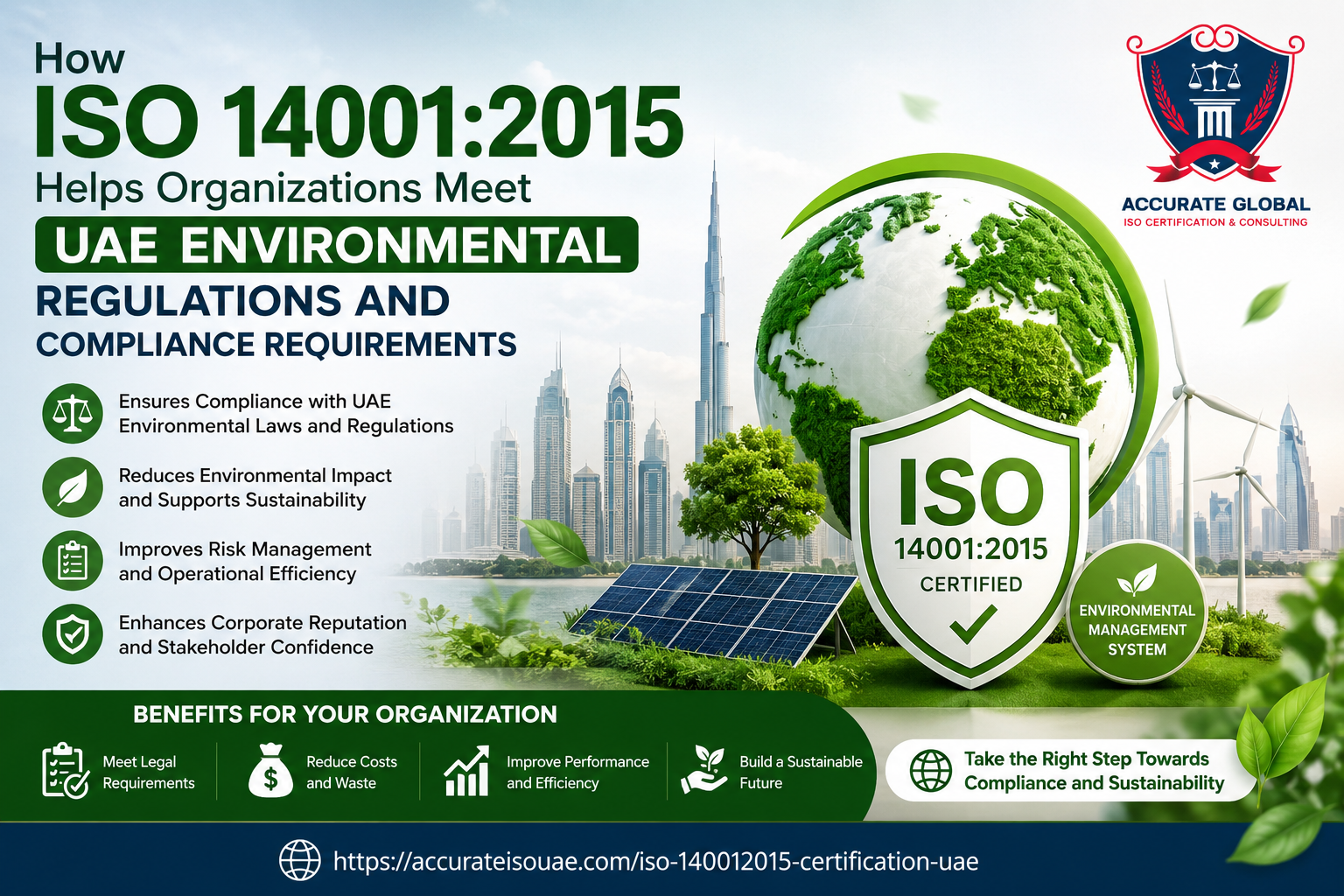
How ISO 14001:2015 Helps Organizations Meet UAE Environmental Regulations and Compliance Requirements
Environmental sustainability has become a major priority for businesses operating in the United Arab Emirates. With increasing government initiatives, stricter environmental regulations, and growing stakeholder expectations, organizations are expected to manage their environmental impact responsibly. Businesses across industries such as construction, manufacturing, logistics, oil and gas, hospitality, and healthcare must ensure compliance with applicable environmental laws while maintaining operational efficiency.
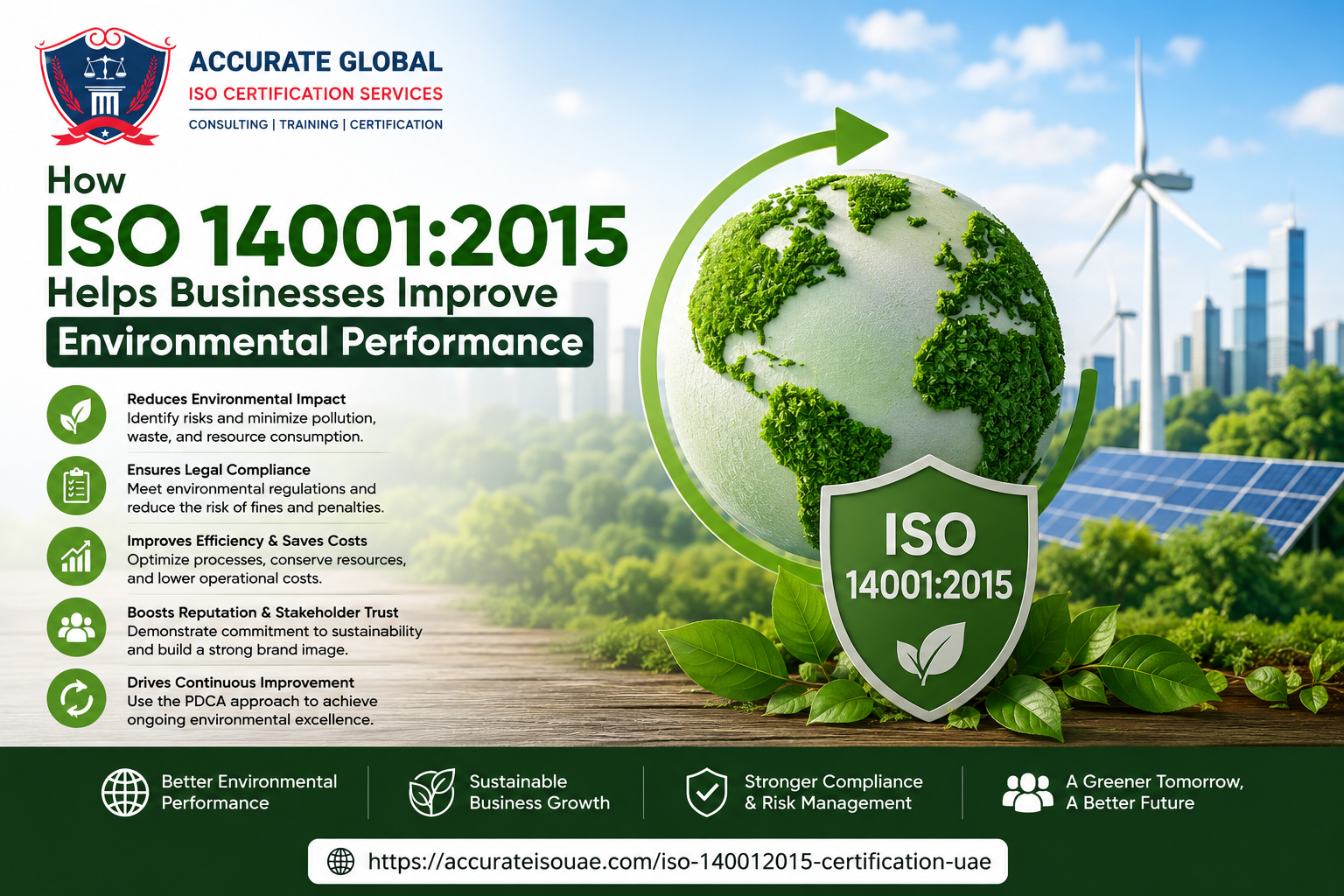
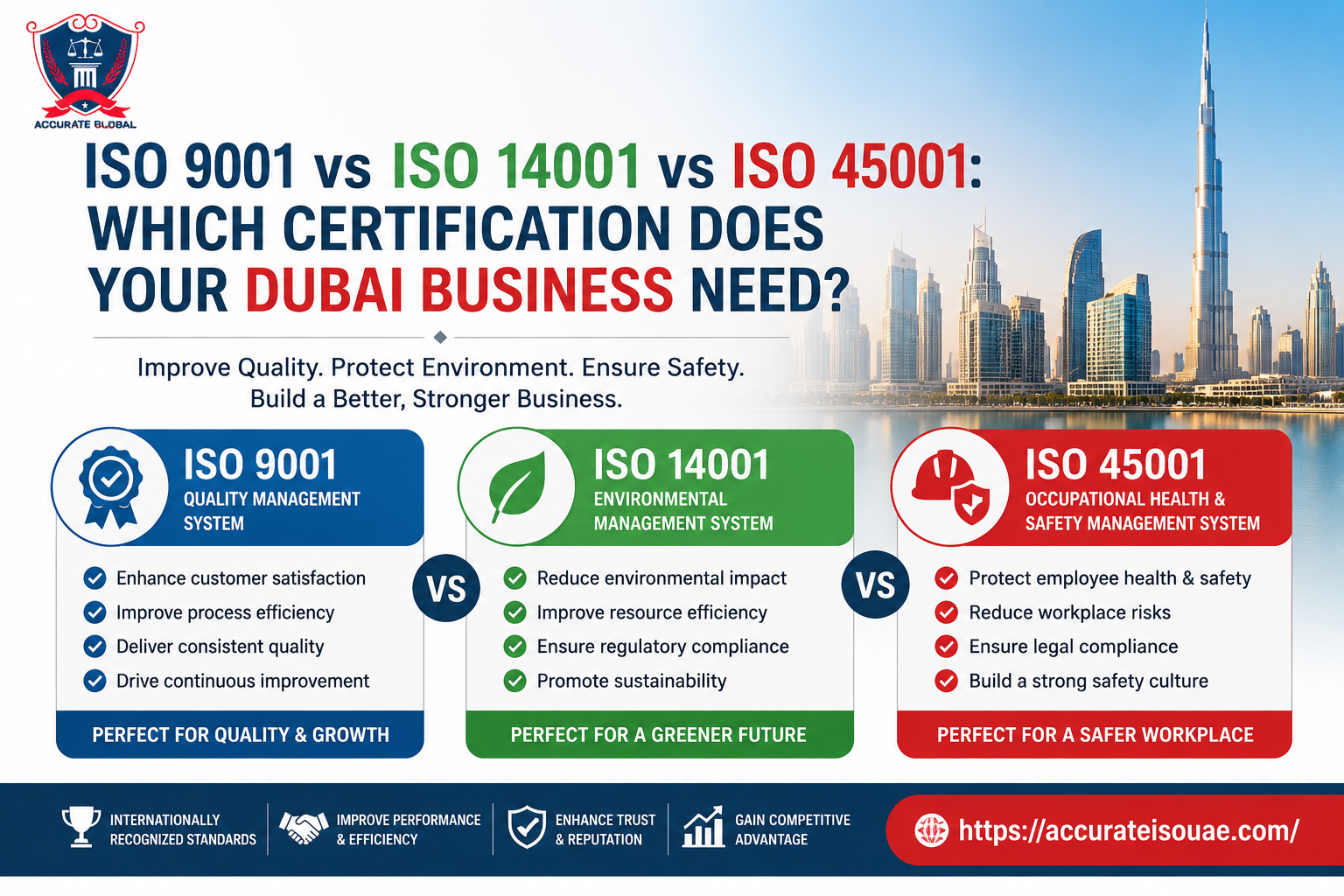
One of the most effective ways to achieve these objectives is through ISO 14001:2015 certification. This internationally recognized Environmental Management System (EMS) standard provides a structured framework that helps organizations identify, manage, monitor, and improve their environmental performance while meeting legal and regulatory requirements.
Understanding ISO 14001:2015 Certification
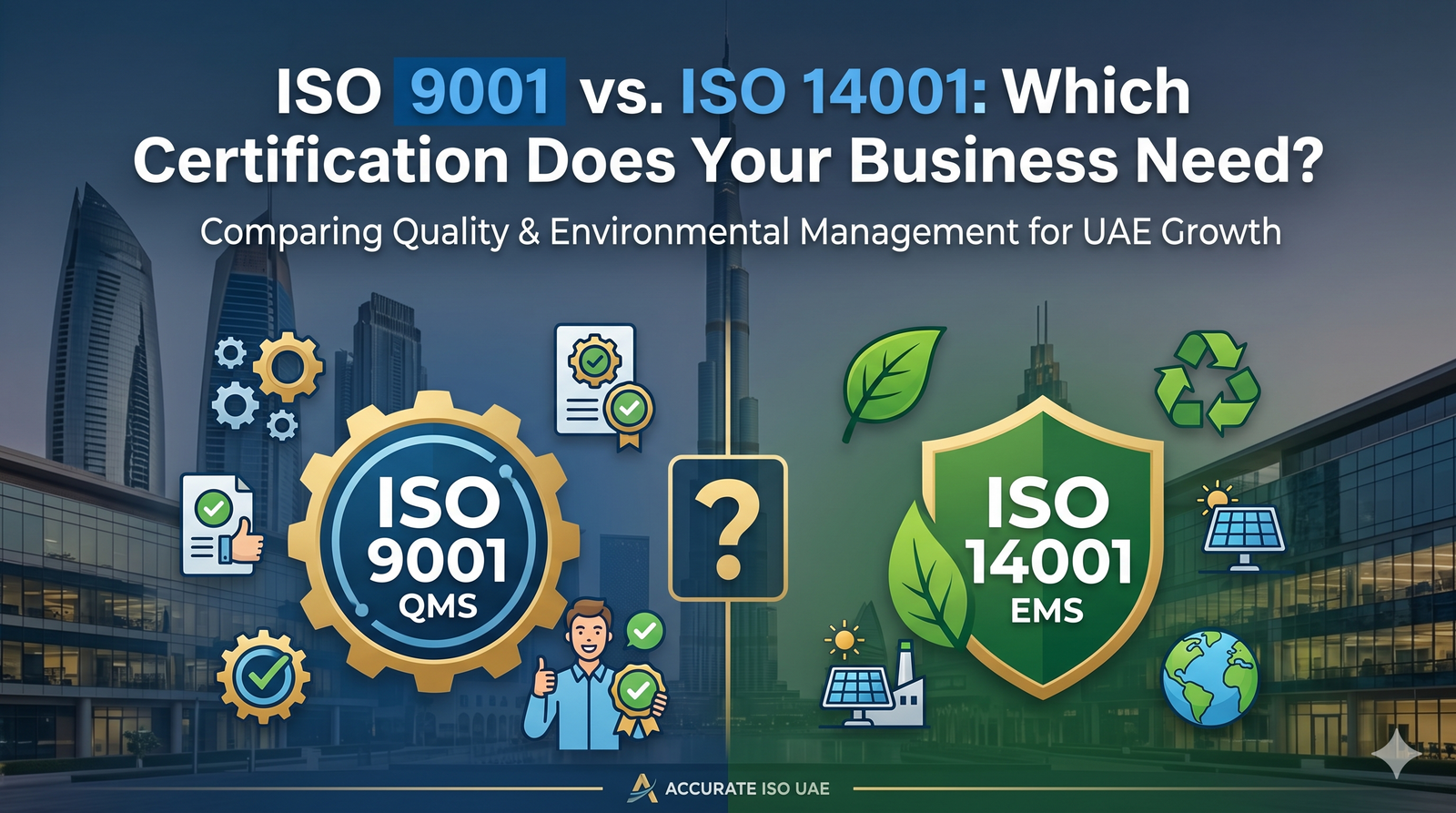
ISO 14001:2015 certification is the global standard for Environmental Management Systems developed by the International Organization for Standardization (ISO). The standard enables organizations to establish processes and controls that reduce environmental impacts, improve resource efficiency, and ensure compliance with environmental regulations.
The certification follows a risk-based approach that encourages continuous improvement and environmental responsibility. It applies to organizations of all sizes and sectors, making it a valuable tool for businesses seeking sustainable growth and regulatory compliance.
The Importance of Environmental Compliance in the UAE
The UAE government has introduced several environmental initiatives and regulations aimed at protecting natural resources, reducing pollution, and promoting sustainable development. Authorities across the Emirates enforce environmental requirements related to:
- Waste management
- Air quality control
- Water conservation
- Hazardous material handling
- Energy efficiency
- Carbon emissions reduction
- Environmental impact assessments
Failure to comply with these regulations can result in financial penalties, operational disruptions, reputational damage, and legal consequences. Therefore, organizations must implement effective environmental management practices to remain compliant and competitive.
How ISO 14001:2015 Certification Supports Regulatory Compliance
1. Identifies Applicable Environmental Regulations
One of the key requirements of ISO 14001:2015 certification is identifying all legal and regulatory obligations relevant to an organization’s operations.
The Environmental Management System requires businesses to:
- Monitor applicable environmental laws
- Track regulatory updates
- Maintain compliance records
- Evaluate compliance status regularly
This systematic approach helps organizations stay informed about changing regulations and avoid compliance gaps.
2. Establishes Environmental Objectives and Controls
ISO 14001:2015 requires organizations to establish measurable environmental objectives aligned with regulatory requirements and business goals.
Examples include:
- Reducing waste generation
- Lowering energy consumption
- Minimizing water usage
- Controlling emissions
- Improving recycling rates
By implementing documented procedures and operational controls, organizations can consistently manage environmental risks and demonstrate compliance to regulators.
3. Improves Environmental Risk Management
Environmental risks can lead to significant legal and operational challenges if not properly managed.
ISO 14001:2015 certification requires organizations to identify environmental aspects and evaluate their potential impacts. This proactive approach helps businesses:
- Prevent environmental incidents
- Reduce pollution risks
- Improve emergency preparedness
- Mitigate compliance violations
Effective risk management enables organizations to address potential issues before they result in regulatory action.
4. Enhances Monitoring and Performance Evaluation
Continuous monitoring is essential for maintaining compliance with environmental regulations.
ISO 14001:2015 requires organizations to:
- Measure environmental performance
- Conduct regular inspections
- Monitor environmental objectives
- Evaluate compliance obligations
- Perform internal audits
These activities help organizations identify areas for improvement and demonstrate accountability to regulatory authorities and stakeholders.
5. Strengthens Documentation and Record Management
Environmental compliance often requires organizations to maintain accurate records and evidence of conformity.
The standard promotes effective documentation practices, including:
- Environmental policies
- Compliance registers
- Monitoring reports
- Audit findings
- Corrective actions
- Training records
Well-maintained documentation helps organizations respond efficiently during inspections and regulatory audits.
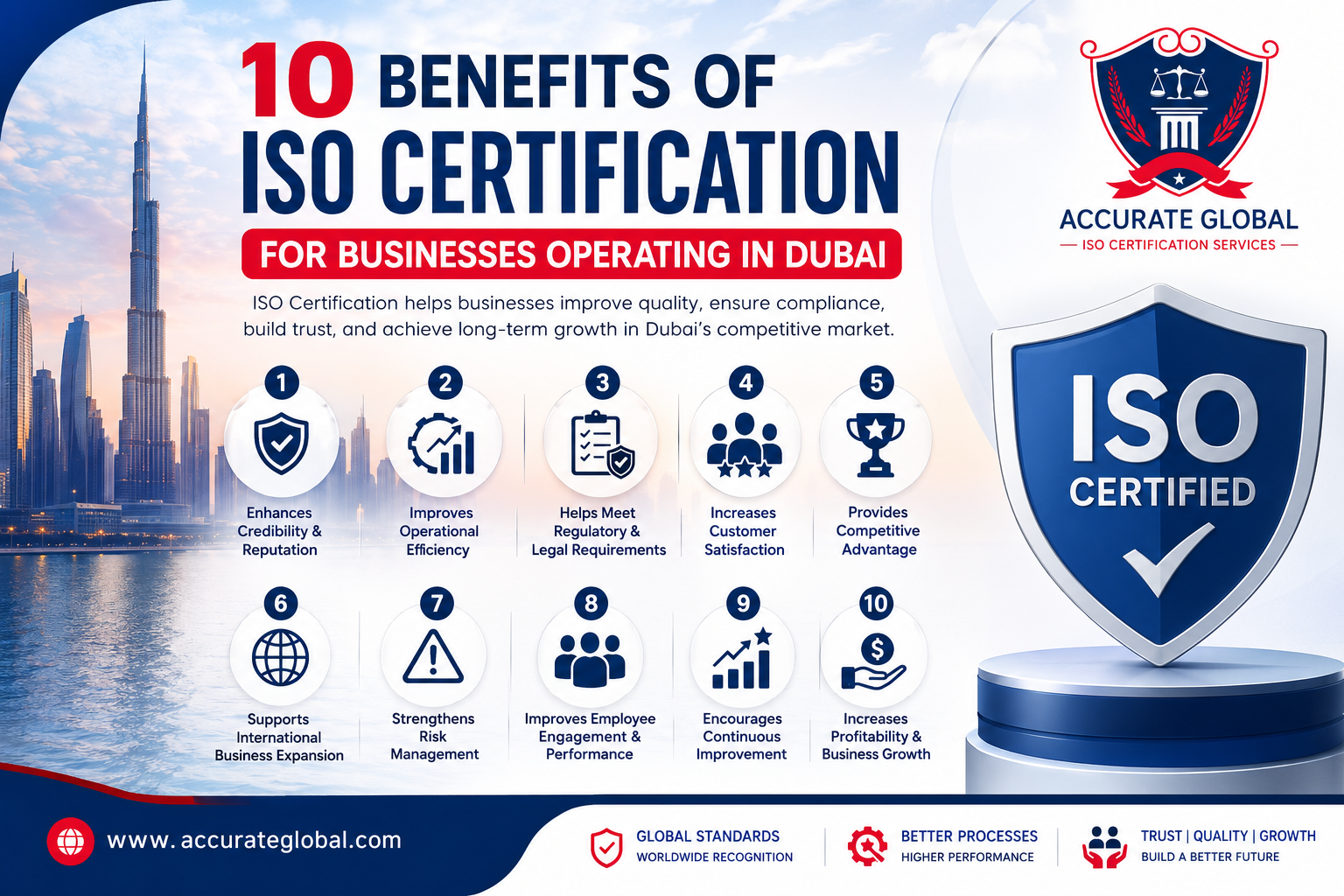
Benefits of ISO 14001:2015 Certification for UAE Businesses
Improved Regulatory Compliance
A structured Environmental Management System ensures organizations consistently meet applicable environmental requirements and reduce the likelihood of non-compliance.
Reduced Environmental Impact
The certification encourages organizations to minimize waste, conserve resources, and reduce pollution, supporting broader sustainability goals.
Enhanced Corporate Reputation
Customers, investors, government agencies, and business partners increasingly prefer organizations that demonstrate environmental responsibility.
Achieving ISO 14001:2015 certification showcases a commitment to sustainability and environmental stewardship.
Increased Operational Efficiency
Environmental management initiatives often result in:
- Lower energy consumption
- Reduced waste disposal costs
- Better resource utilization
- Improved process efficiency
These improvements can lead to significant long-term cost savings.
Competitive Advantage
Many government contracts, tenders, and large corporate procurement processes favor or require suppliers with internationally recognized certifications.
ISO 14001 certification can strengthen an organization's market position and improve business opportunities throughout the UAE.
Industries That Benefit from ISO 14001:2015 Certification
Organizations across various sectors can benefit from implementing ISO 14001:2015, including:
- Construction and infrastructure
- Manufacturing and industrial operations
- Oil and gas companies
- Logistics and transportation
- Healthcare facilities
- Hospitality and tourism
- Food and beverage industries
- Educational institutions
- Government organizations
Regardless of industry, businesses can use the Environmental Management System framework to improve compliance and sustainability performance.
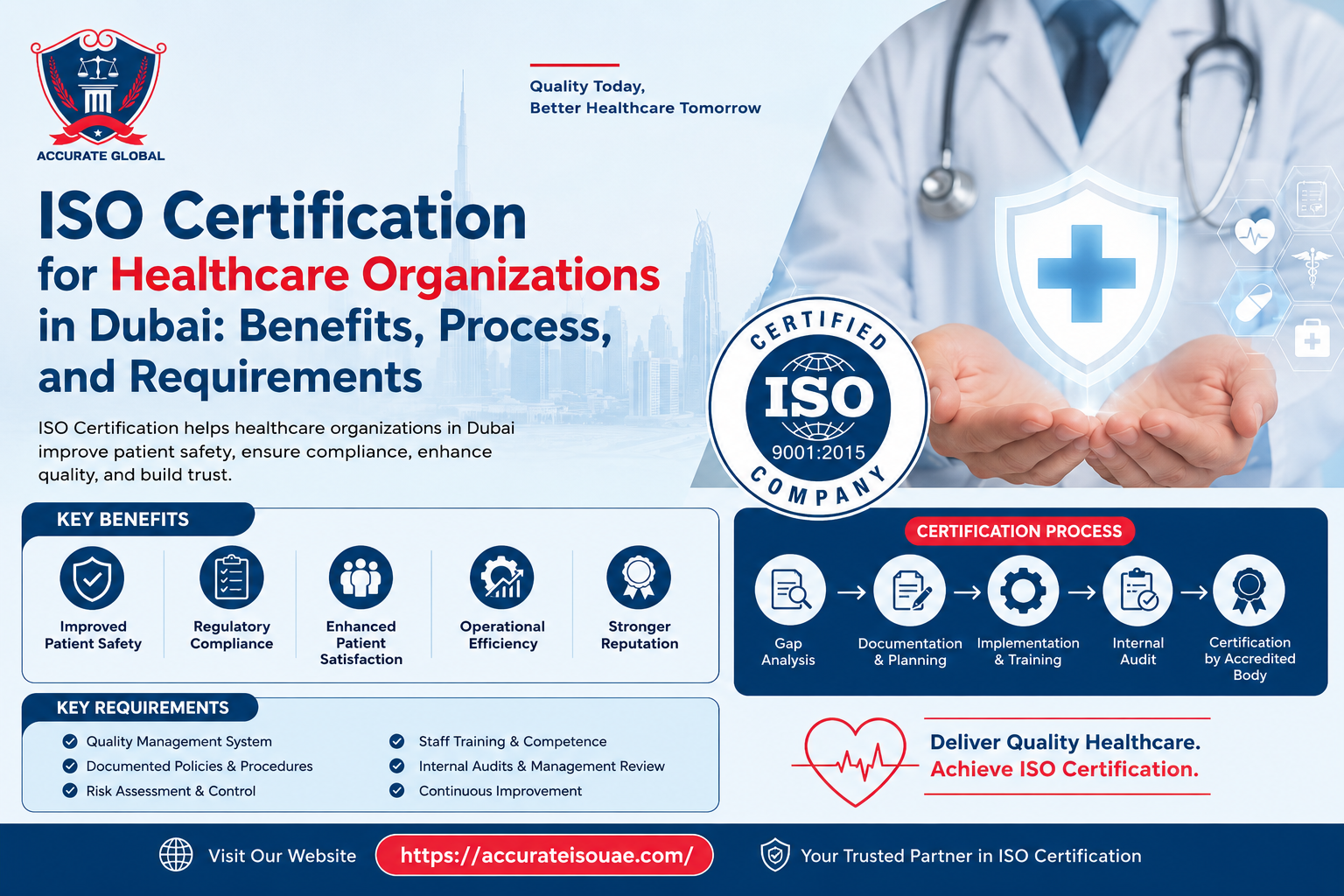
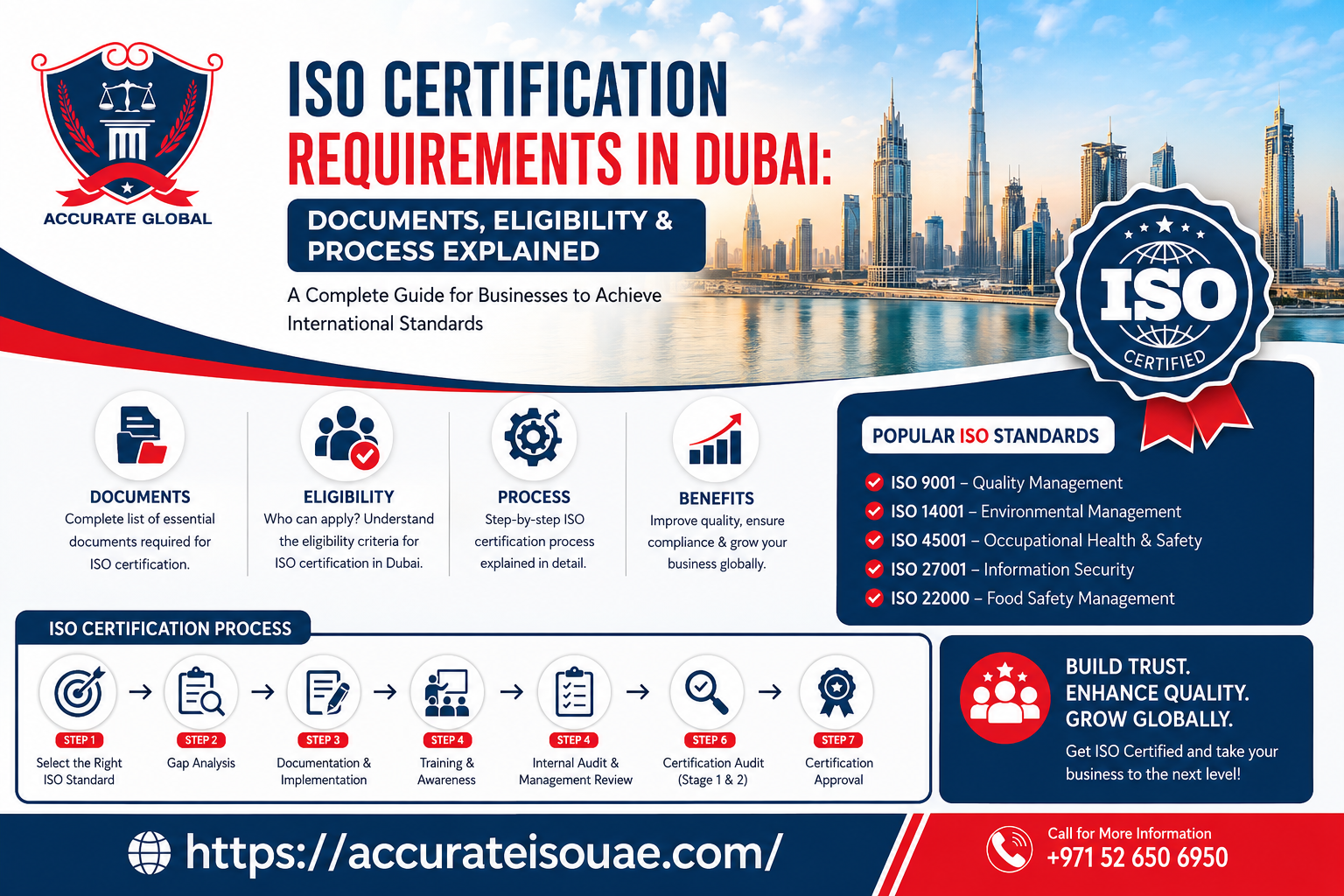
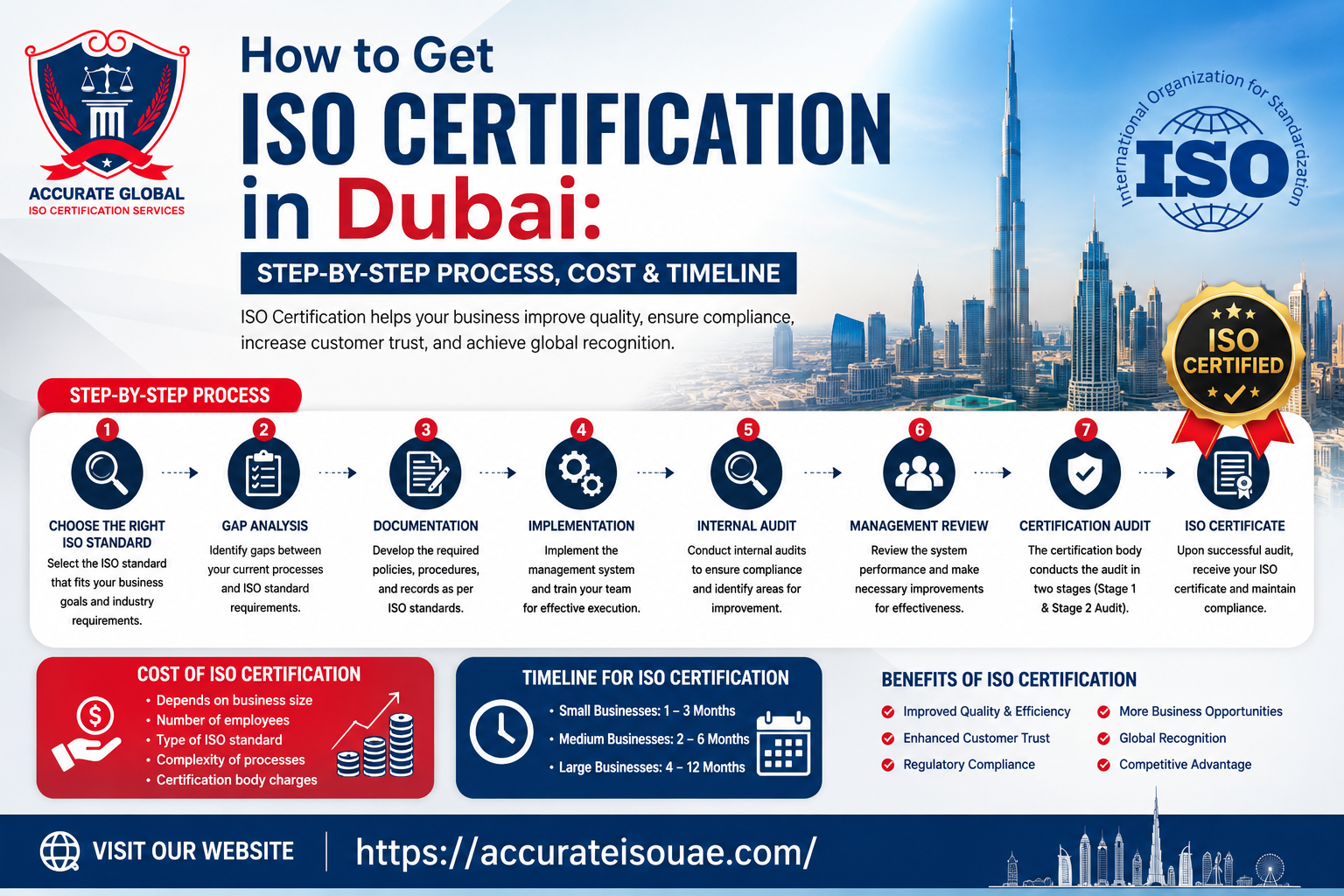
Steps to Achieve ISO 14001:2015 Certification
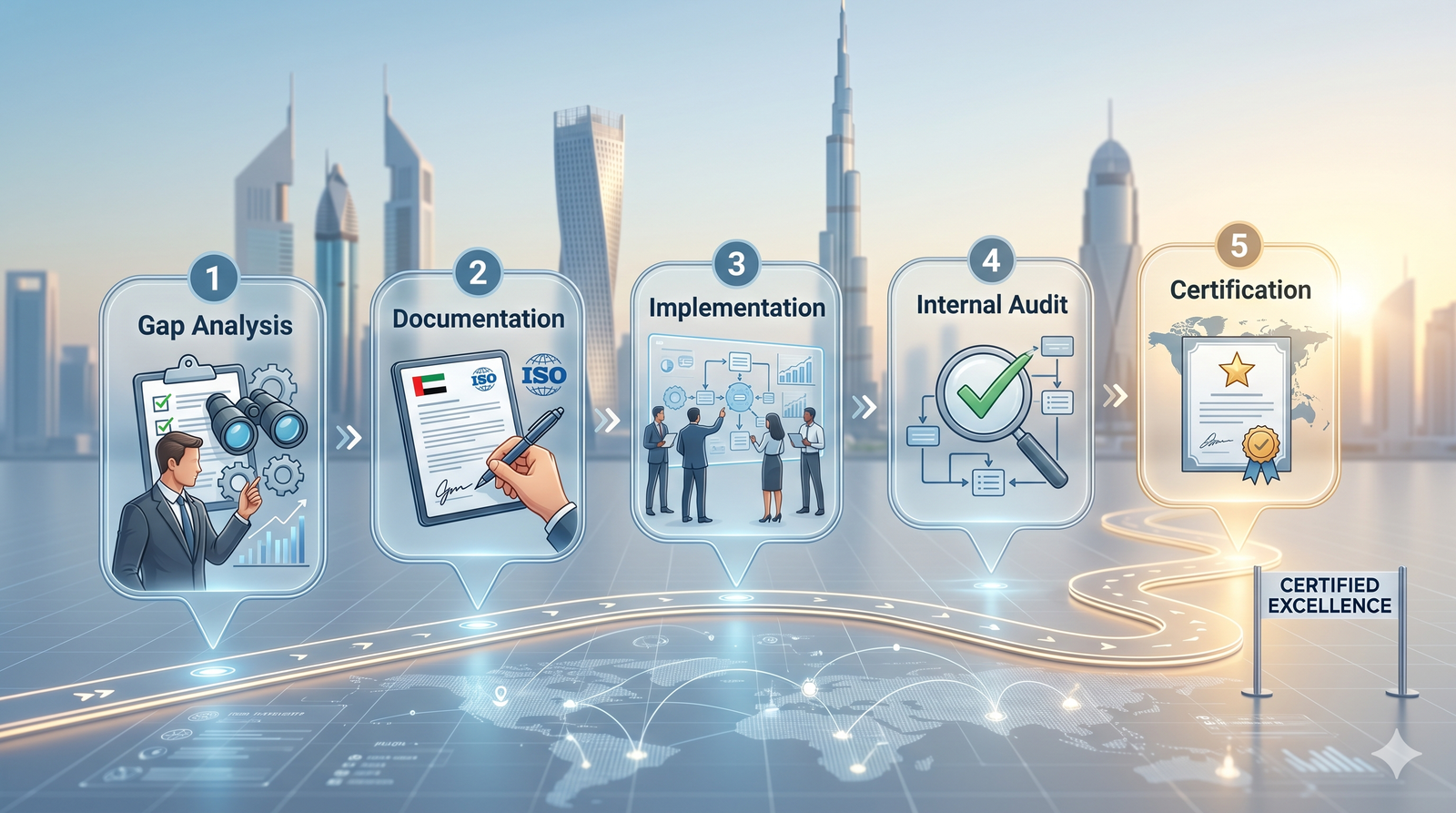
Organizations seeking certification typically follow these steps:
- Conduct an environmental gap analysis.
- Identify applicable legal and regulatory requirements.
- Develop an Environmental Management System.
- Establish environmental objectives and controls.
- Train employees on EMS procedures.
- Conduct internal audits.
- Perform management reviews.
- Undergo certification audit by an accredited certification body.
With proper planning and implementation, organizations can successfully achieve certification and maintain ongoing compliance.
Conclusion
As environmental regulations continue to evolve across the UAE, organizations must adopt proactive strategies to ensure compliance and sustainable operations. ISO 14001:2015 certification provides a comprehensive framework that helps businesses identify environmental obligations, manage risks, improve performance, and demonstrate commitment to environmental responsibility.
By implementing an effective Environmental Management System, organizations can not only meet UAE environmental regulations and compliance requirements but also enhance operational efficiency, strengthen stakeholder confidence, and support long-term business success. Investing in ISO 14001:2015 certification is a strategic decision that enables businesses to achieve regulatory compliance while contributing to a more sustainable future.

.png)

.png)

.png)
.png)
.png)
.png)
.png)