The Step-by-Step Guide to Navigating ISO Certification Services in Dubai: What You Need to Know
Here is the expanded, 800-word version of the article for Topic 2. This version is designed to be more authoritative, detailed, and highly optimized for SEO with your target keyword and internal links.
The Comprehensive Step-by-Step Guide to Navigating ISO Certification Services in Dubai: What You Need to Know
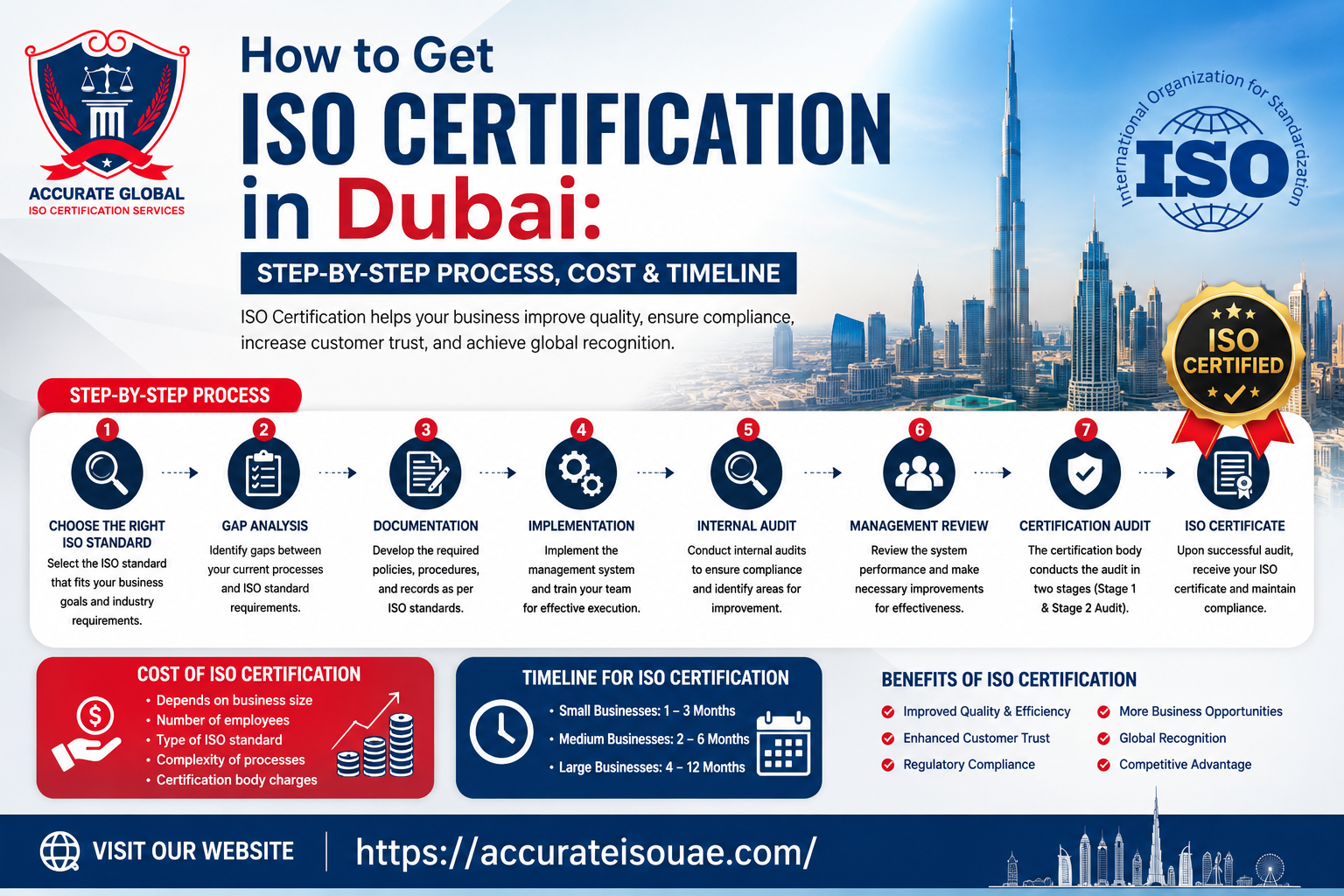
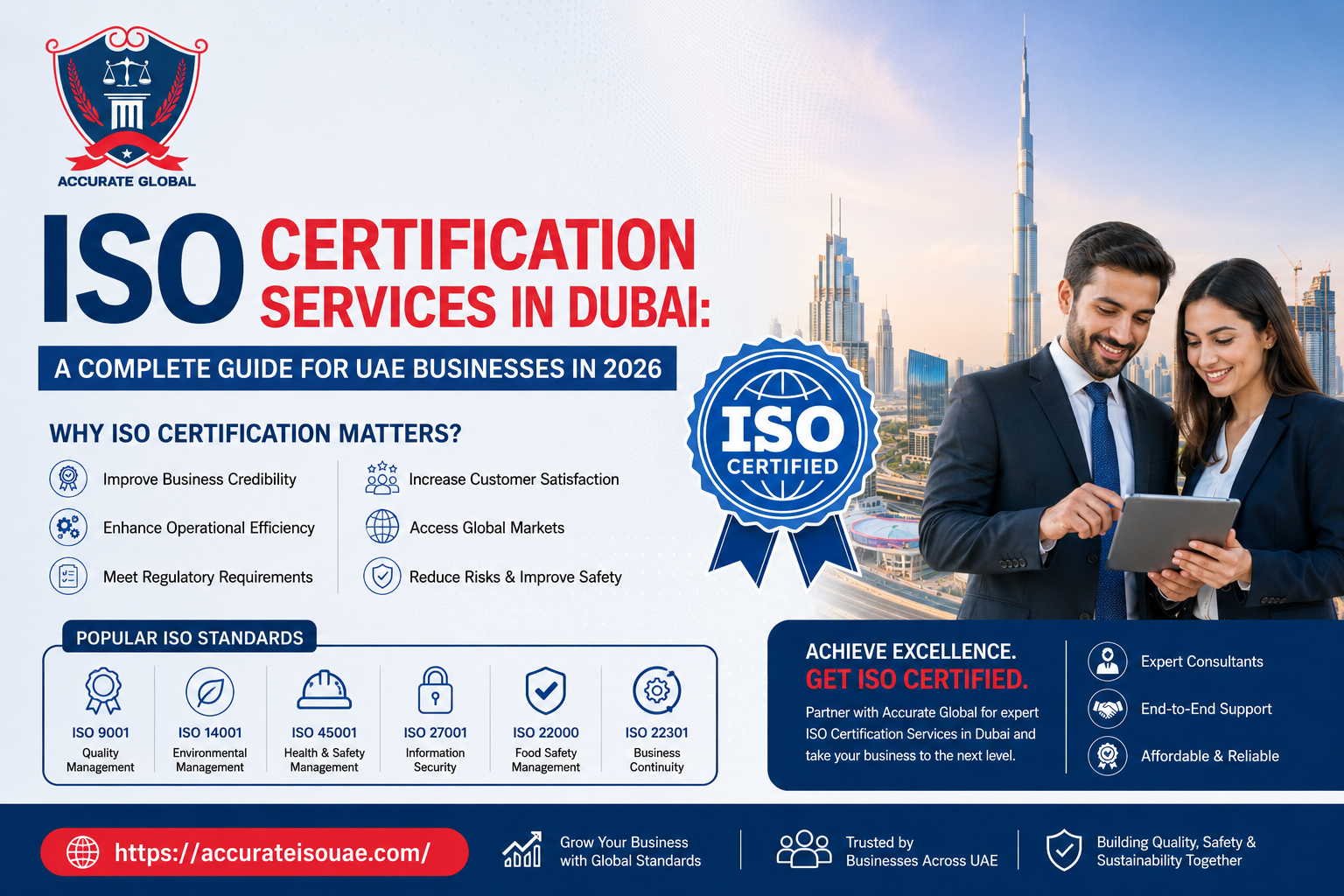
In the modern global economy, Dubai stands as a beacon of business excellence and a gateway between the East and the West. For businesses operating in this dynamic hub, maintaining high standards isn't just about internal pride—it is a ticket to the global stage. However, many business owners feel overwhelmed by the technicalities of international standards. Navigating the world of ISO Certification Services in Dubai doesn't have to be a struggle. With a clear roadmap and the right expertise, your organization can achieve certification efficiently.
In this guide, we break down the end-to-end journey of obtaining ISO certification in the UAE, ensuring your business stays compliant, competitive, and credible.
Why Dubai Businesses Prioritize ISO Standards
Before diving into the steps, it is essential to understand the local context. Dubai is a city of "gold standards." Whether you are in construction, logistics, healthcare, or IT, the Dubai government and major private developers often require ISO compliance as a mandatory part of their procurement process. By utilizing professional ISO Certification Services in Dubai, you align your company with the UAE's Vision 2030, which emphasizes quality, sustainability, and digital transformation.
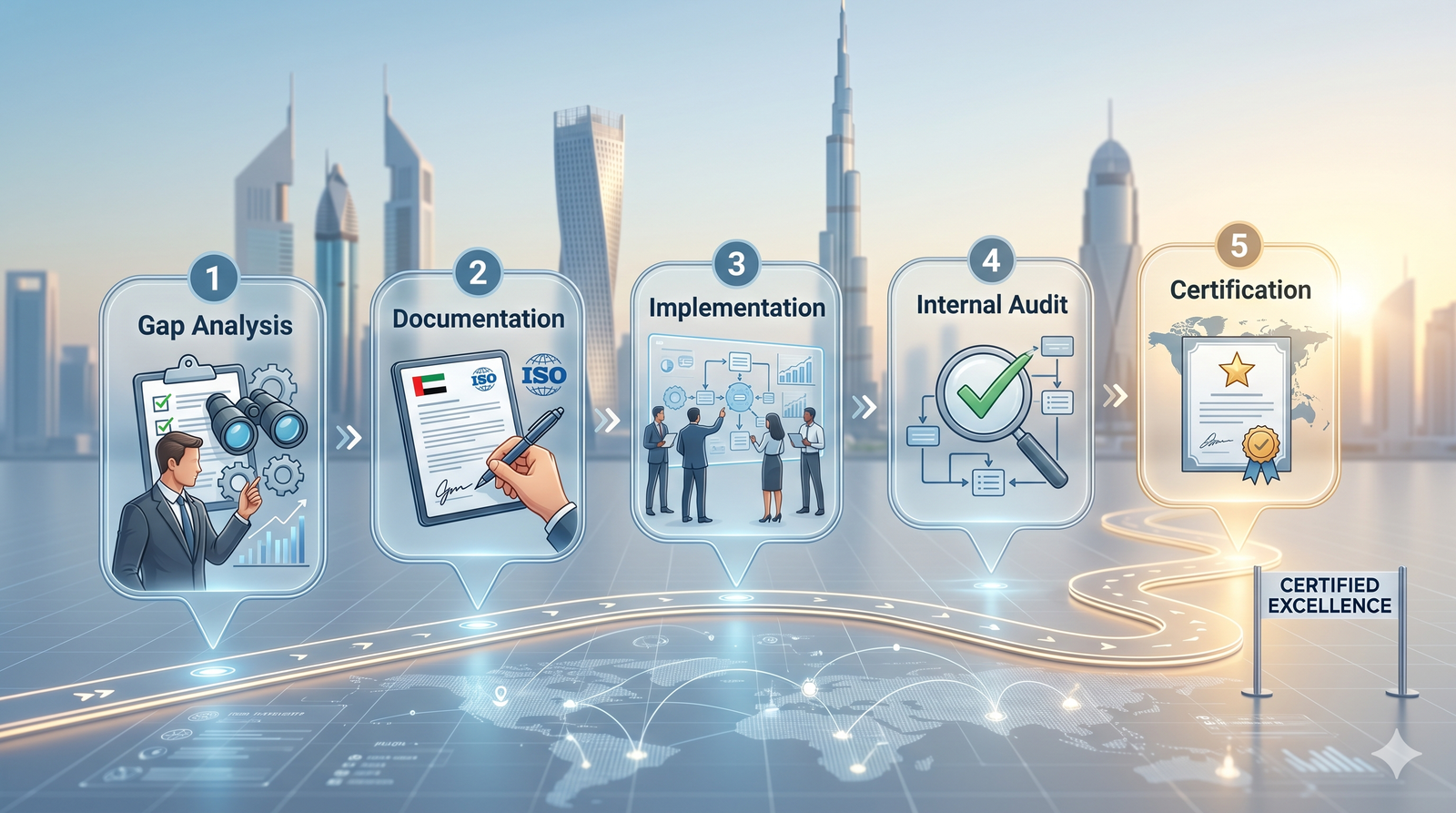
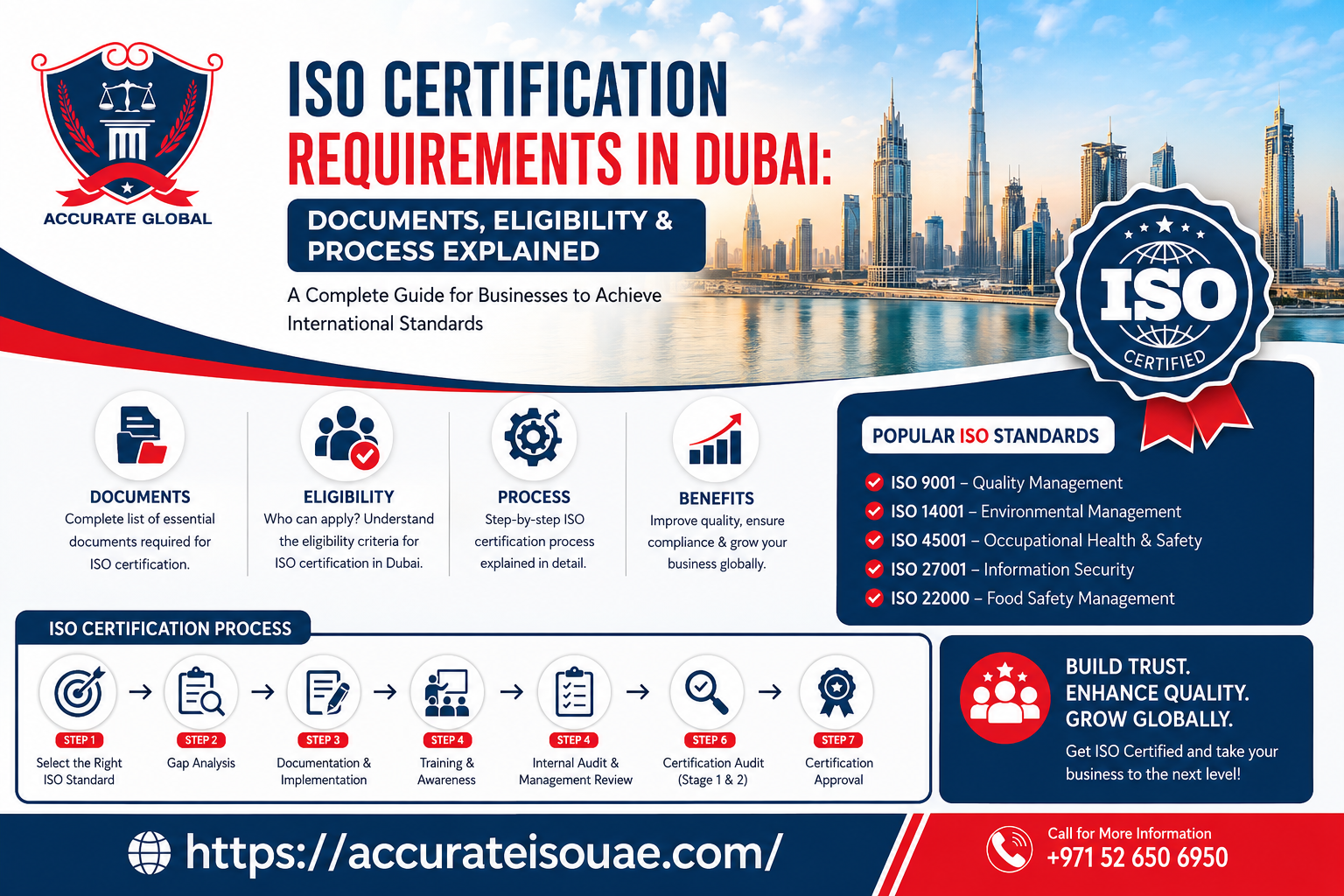
The 5-Stage Roadmap to ISO Success
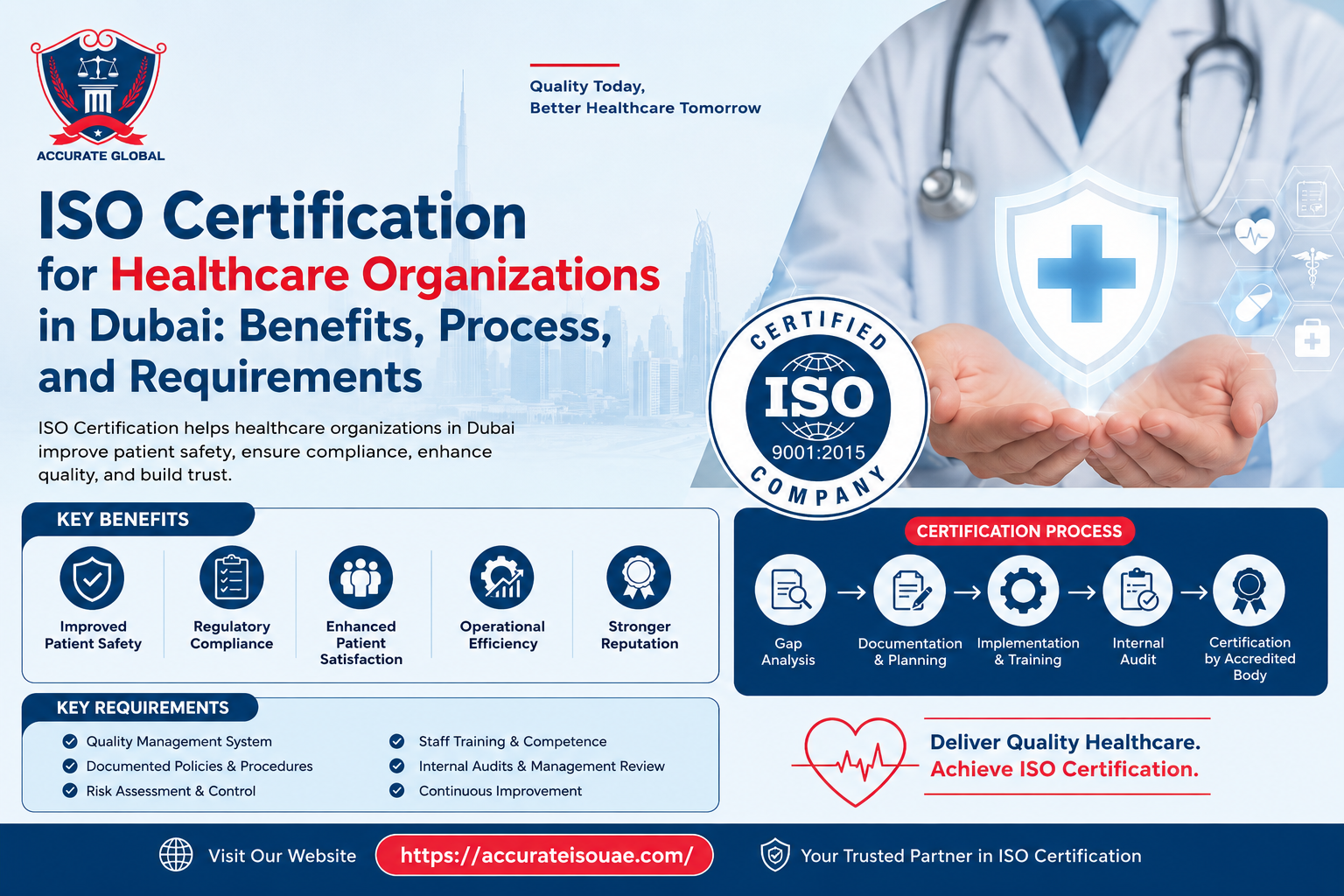
Step 1: The Gap Analysis – Where Do You Stand?
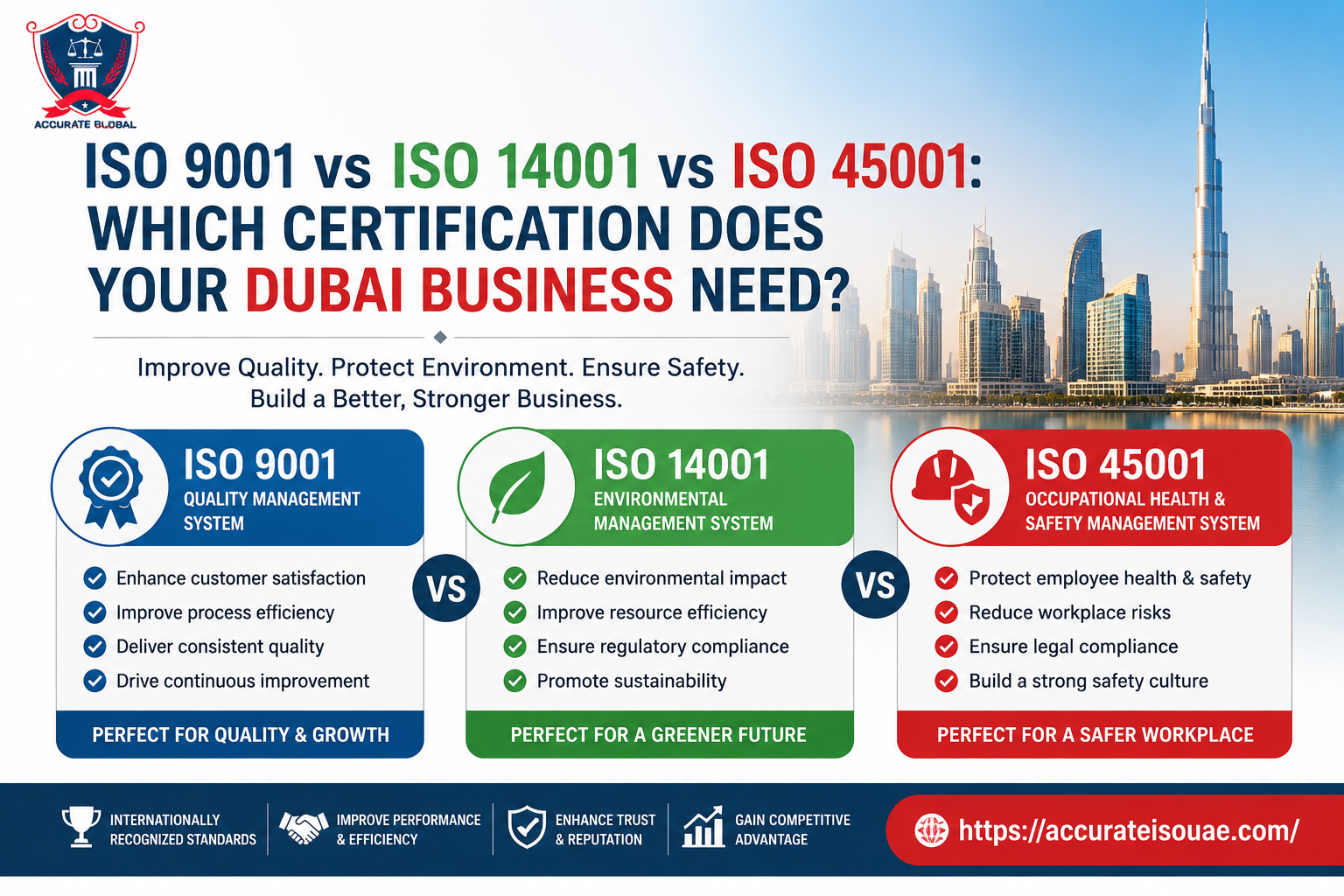
Every journey begins with a map. In the world of ISO, this is called a Gap Analysis. The goal here is to compare your current business processes against the specific requirements of the ISO standard you are pursuing (e.g., ISO 9001 for Quality or ISO 45001 for Occupational Health and Safety).
During this stage, a consultant will:
- Review your current workflows.
- Identify missing controls or documentation.
- Provide a detailed "Gap Report" that serves as the foundation for your implementation plan.
Step 2: Custom Documentation & Process Design
Documentation is the most critical and often the most time-consuming part of the process. You cannot manage what you do not document. ISO requires a structured approach to how tasks are performed, monitored, and improved.
However, a common mistake is creating "generic" manuals. Your documentation must reflect your actual operations in the UAE. Expert ISO Certification Services in Dubai help you draft:
- Quality Manuals: The high-level vision of your management system.
- Standard Operating Procedures (SOPs): Detailed instructions for daily tasks.
- Records & Forms: Tools to prove that the SOPs are actually being followed.
Step 3: Implementation and Cultural Integration
A management system is only as good as the people running it. Once the documentation is ready, it must be implemented across the organization. This is where many businesses face "change resistance."
To overcome this, you must focus on Employee Training. Staff members at all levels—from the warehouse to the boardroom—must understand their role in the new system. Training sessions should focus on the benefits of ISO, such as reduced errors, better safety, and clearer job descriptions. When implementation is handled correctly, ISO becomes part of the company culture, not just a set of rules.
Step 4: The Internal Audit – The "Dry Run"
Before you invite an external certification body to your office, you must prove to yourself that your system works. This is done through an Internal Audit.
An internal auditor (which can be a trained staff member or your consultant) will check:
- Are employees following the new SOPs?
- Is the management reviewing performance data?
- Are there any non-conformities that need to be fixed?
This stage is vital because it allows you to identify and resolve issues in a low-stakes environment before the final "High Stakes" assessment.
Step 5: External Assessment & Official Certification
The final step is the Certification Audit, conducted by an accredited third-party Certification Body (CB). This usually happens in two stages:
- Stage 1 (Document Review): The auditor ensures your manuals and plans meet the standard.
- Stage 2 (On-Site Audit): The auditor visits your facility in Dubai to see the system in action.
If you have worked with reputable ISO Certification Services in Dubai, your consultant will likely be present to guide you through the auditor's questions. Once the auditor is satisfied, they recommend your company for certification.
Avoiding Common Pitfalls in the UAE Market
Many businesses in Dubai try to take shortcuts by buying "ready-made" ISO templates online. In the UAE, where regulatory bodies like the Dubai Municipality or the Ministry of Industry and Advanced Technology (MoIAT) have specific requirements, a template approach often fails.
Why expert consultancy is essential:
- Local Knowledge: Ensuring your ISO system aligns with UAE Labor Laws and Environmental regulations.
- Faster Turnaround: Reducing the time wasted on trial and error.
- High Pass Rate: Professional consultants ensure you pass the external audit on the first attempt.
Conclusion: A Strategic Investment for the Future
Achieving ISO certification is more than just getting a certificate to hang on the wall. It is a transformational process that forces a business to look inward, fix inefficiencies, and commit to continuous improvement. In a city as competitive as Dubai, this commitment is what separates market leaders from everyone else.
By following this step-by-step guide and partnering with experienced ISO Certification Services in Dubai, you ensure that your path to international recognition is smooth, professional, and ultimately profitable.
.png)
.png)
.png)
.png)
.png)
.png)
.png)