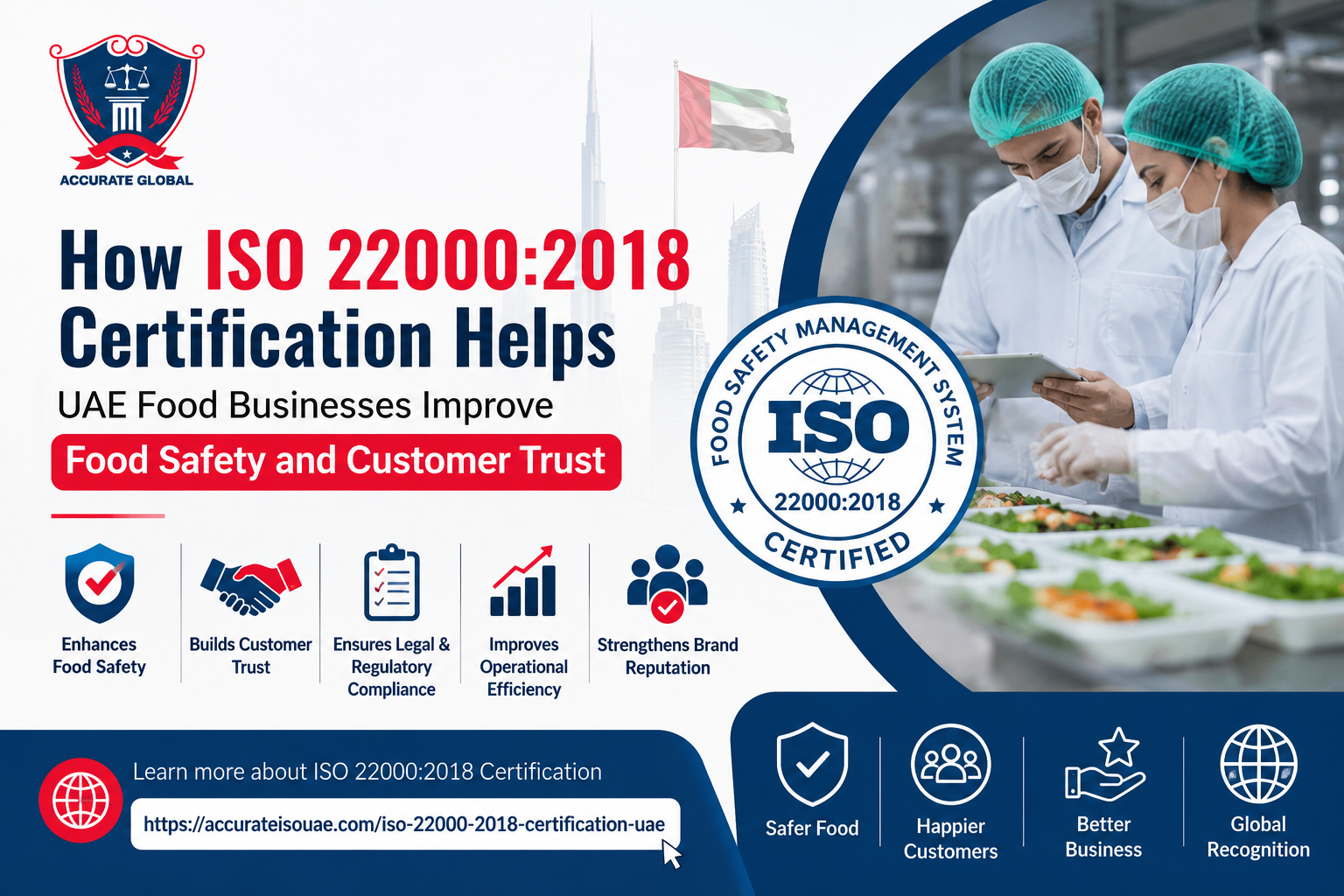
How ISO 22000:2018 Certification Helps UAE Food Businesses Improve Food Safety and Customer Trust
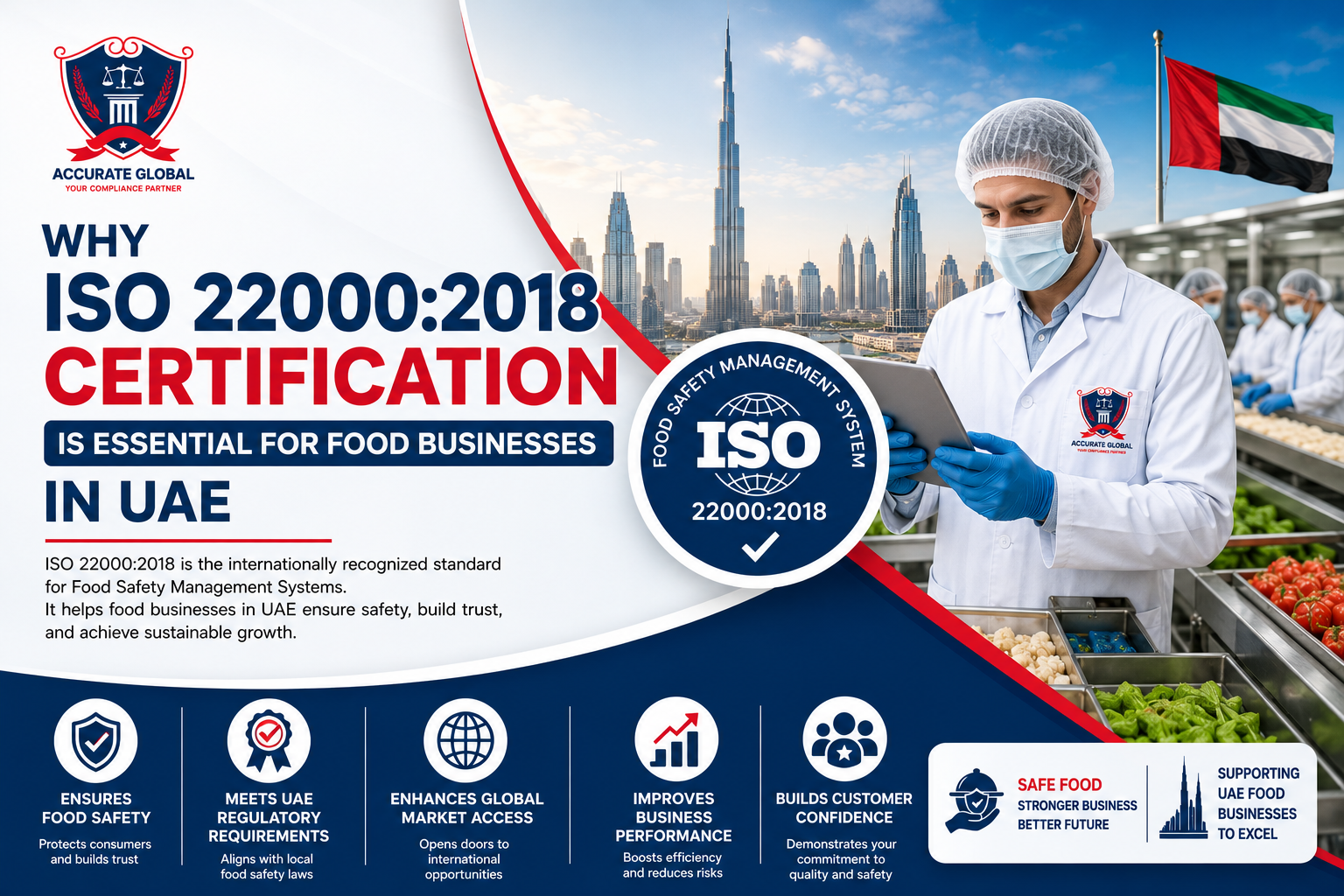
Food safety has become one of the most important concerns in the global food industry. In the UAE, where the food sector is rapidly growing due to tourism, hospitality, retail, and international trade, businesses must maintain high food safety standards to meet customer expectations and regulatory requirements. This is where ISO 22000:2018 Certification plays a vital role.
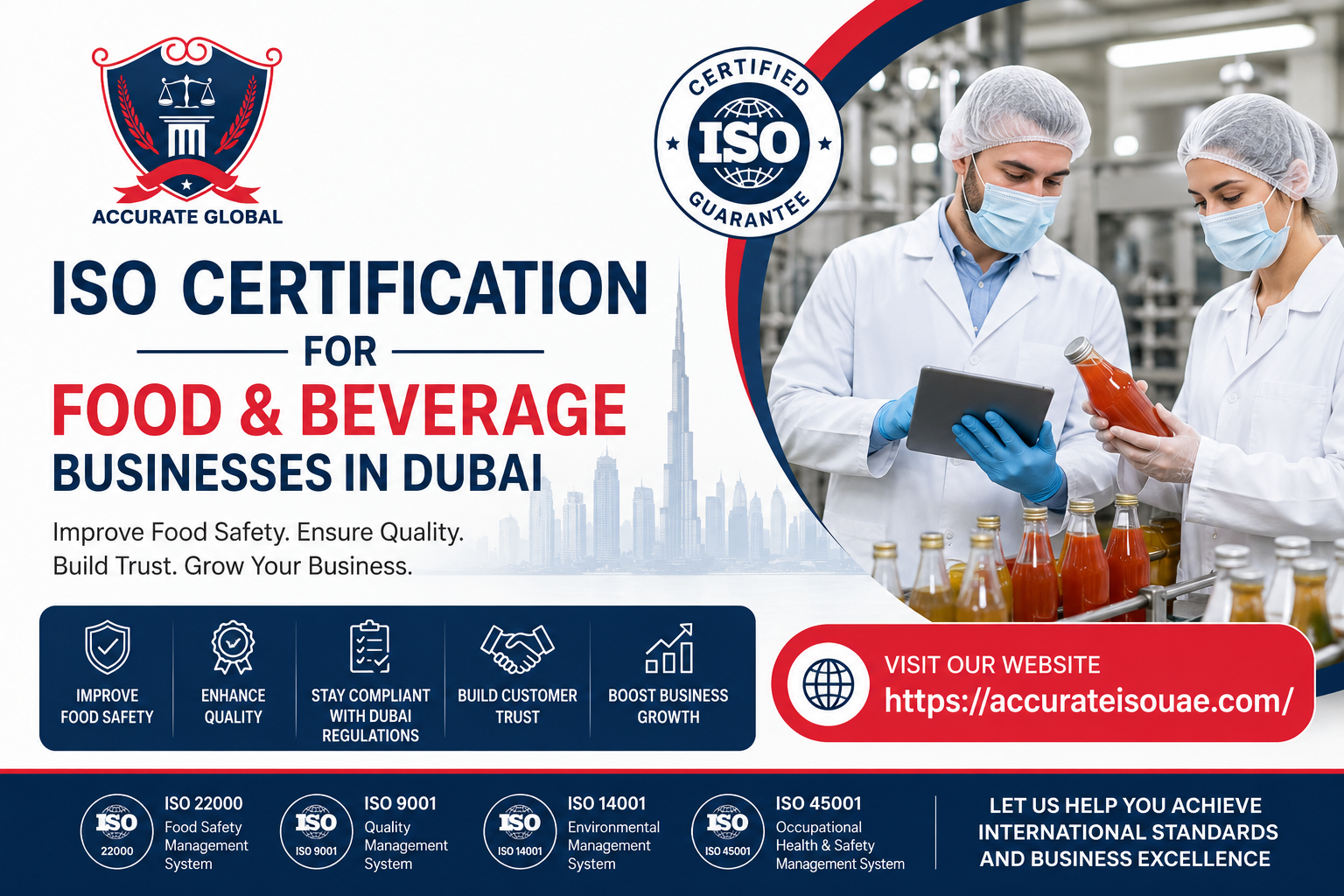
ISO 22000:2018 is an internationally recognized Food Safety Management System (FSMS) standard designed to help organizations identify, control, and prevent food safety hazards throughout the food supply chain. From food manufacturers and restaurants to catering companies and food packaging businesses, this certification helps organizations ensure food safety, improve operational efficiency, and build customer trust.
What is ISO 22000:2018 Certification?
ISO 22000:2018 Certification is a global standard developed by the International Organization for Standardization (ISO) for food safety management systems. The standard combines Hazard Analysis and Critical Control Points (HACCP) principles with effective management system processes to ensure food products are safe for consumption.
The certification applies to all organizations involved in the food chain, including:
- Food manufacturing companies
- Restaurants and hotels
- Catering businesses
- Food storage and transportation providers
- Food packaging companies
- Beverage manufacturers
- Agricultural and food ingredient suppliers
The main objective of ISO 22000:2018 is to establish a structured system that helps businesses control food safety risks and maintain compliance with food safety regulations.
Importance of Food Safety in UAE
The UAE has strict food safety regulations to protect consumers and maintain international quality standards. With millions of residents and tourists consuming food products daily, businesses must ensure hygiene, quality, and traceability across their operations.
Food contamination, poor hygiene practices, and improper food handling can damage a company’s reputation and result in legal penalties. By implementing ISO 22000:2018 Certification, UAE food businesses can proactively manage food safety risks and demonstrate their commitment to delivering safe food products.
How ISO 22000:2018 Certification Improves Food Safety
1. Identifies and Controls Food Safety Hazards
One of the biggest benefits of ISO 22000:2018 is its ability to help organizations identify potential food safety hazards before they become serious problems. The standard requires businesses to perform hazard analysis and establish preventive control measures.
This includes controlling:
- Biological hazards
- Chemical contamination
- Physical contamination
- Improper food handling practices
- Cross-contamination risks
By implementing preventive measures, businesses can significantly reduce the chances of foodborne illnesses and product recalls.
2. Enhances Hygiene and Sanitation Practices
Good hygiene practices are essential in the food industry. ISO 22000:2018 establishes clear procedures for cleanliness, sanitation, employee hygiene, and food handling processes.
Businesses are encouraged to:
- Maintain clean production environments
- Train employees on hygiene standards
- Monitor sanitation procedures regularly
- Ensure proper storage and transportation conditions
Improved hygiene practices help maintain food quality and protect consumer health.
3. Strengthens HACCP Implementation
ISO 22000:2018 integrates HACCP principles into the food safety management system. HACCP is a preventive approach used to identify and control food safety hazards during production and processing.
Through proper HACCP implementation, businesses can:
- Monitor critical control points
- Reduce contamination risks
- Improve food handling procedures
- Ensure consistent food safety compliance
This systematic approach improves overall food safety management and operational control.
4. Improves Traceability in the Food Supply Chain
Traceability is essential in the food industry, especially when dealing with imports, exports, and large-scale distribution. ISO 22000:2018 requires organizations to establish effective traceability systems to track products throughout the supply chain.
This allows businesses to:
- Identify the source of raw materials
- Monitor product movement
- Respond quickly to food safety incidents
- Conduct efficient product recalls if necessary
Strong traceability systems increase transparency and accountability within the food industry.
How ISO 22000:2018 Certification Builds Customer Trust
1. Demonstrates Commitment to Food Safety
Consumers today are more aware of food safety and quality standards than ever before. Customers prefer businesses that follow internationally recognized food safety practices.
Achieving ISO 22000:2018 Certification demonstrates that a company is committed to maintaining safe and hygienic food production processes. This increases customer confidence and strengthens brand reputation.
2. Enhances Brand Reputation
In a competitive UAE food market, trust is essential for long-term business success. Certification helps businesses stand out from competitors by proving they meet global food safety standards.
A certified business is often viewed as:
- More reliable
- More professional
- More quality-focused
- More customer-oriented
This positive reputation can attract new customers and improve customer retention.
3. Increases Business Opportunities
Many international clients, retailers, and government organizations prefer working with ISO-certified suppliers. ISO 22000:2018 Certification can help UAE food businesses access new markets and secure larger business contracts.
Certification is particularly beneficial for businesses involved in:
- Food exports
- Hospitality services
- Airline catering
- Large retail supply chains
It also improves credibility during supplier evaluations and audits.
Operational Benefits of ISO 22000:2018 Certification
Apart from food safety and customer trust, ISO 22000:2018 offers several operational advantages.
Improved Efficiency
The certification encourages businesses to standardize processes and reduce operational errors. This improves workflow efficiency and minimizes waste.
Better Employee Awareness
Employee training is a key requirement of ISO 22000:2018. Staff members become more aware of food safety responsibilities, leading to improved workplace performance.
Regulatory Compliance
The standard helps businesses comply with UAE food safety regulations and legal requirements, reducing the risk of fines and penalties.
Continuous Improvement
ISO 22000:2018 promotes continuous monitoring and improvement of food safety systems. Businesses can regularly evaluate performance and make necessary improvements to maintain high standards.
Why UAE Food Businesses Should Get ISO 22000:2018 Certification
The UAE food industry is highly competitive and strictly regulated. Whether a business operates a restaurant, food factory, catering service, or food distribution company, maintaining food safety standards is critical for success.
By obtaining ISO 22000:2018 Certification, businesses can:
- Improve food safety management
- Reduce contamination risks
- Enhance customer satisfaction
- Meet legal and regulatory requirements
- Increase market opportunities
- Build long-term customer trust
Certification not only protects consumers but also strengthens the overall reputation and growth of the business.
Conclusion
Food safety is a top priority for every food-related business in the UAE. Implementing ISO 22000:2018 Certification helps organizations establish a strong Food Safety Management System that ensures safe food production, improves operational efficiency, and increases customer confidence.
With growing customer expectations and strict food safety regulations, ISO 22000:2018 Certification has become an essential investment for businesses that want to achieve sustainable growth and maintain a competitive advantage in the UAE food industry.
By adopting international food safety standards, UAE food businesses can protect their customers, improve brand reputation, and create long-term success in both local and global markets.

.png)

.png)

.png)
.png)

.png)
.png)
.png)