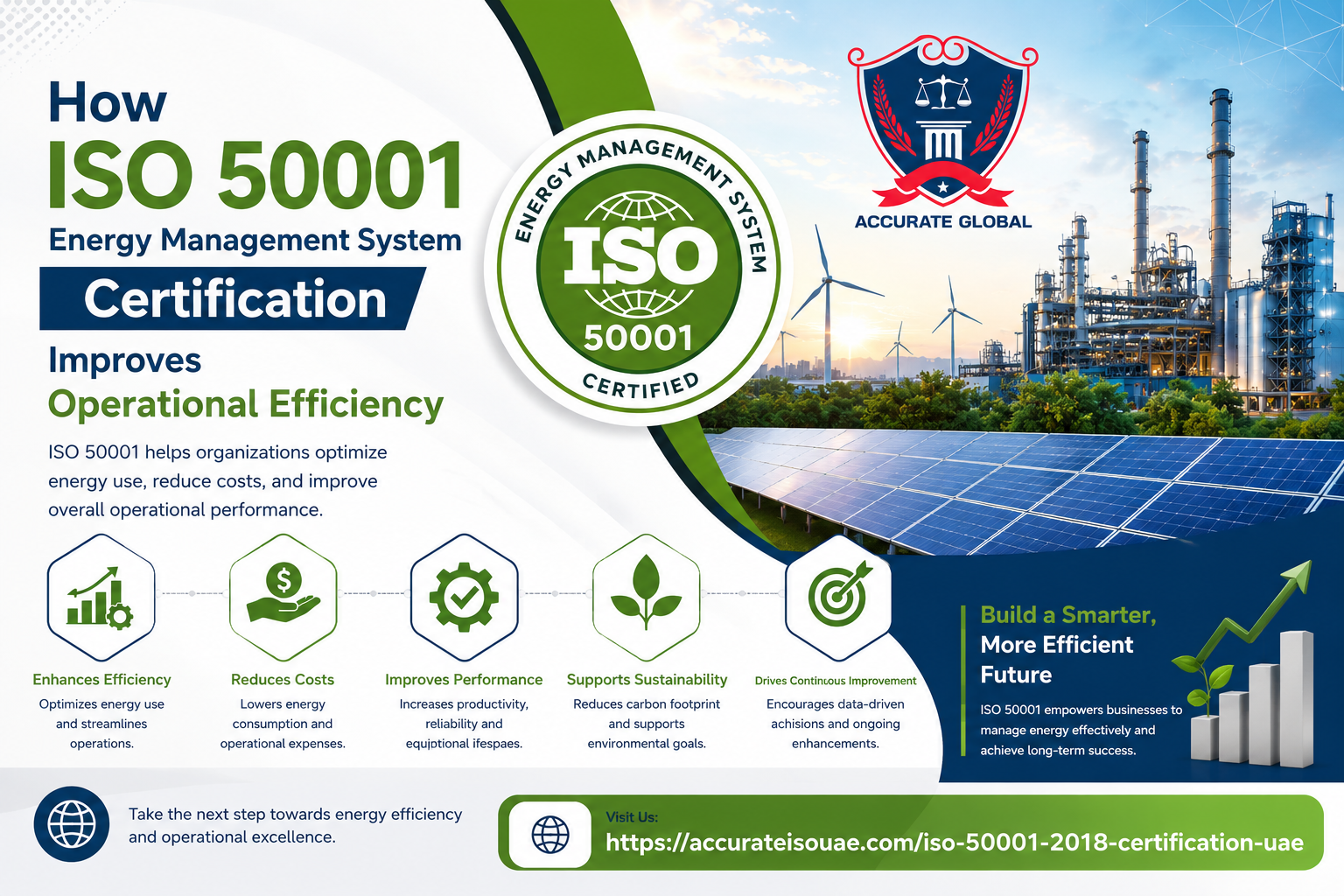
How ISO 50001 Energy Management System Certification Improves Operational Efficiency
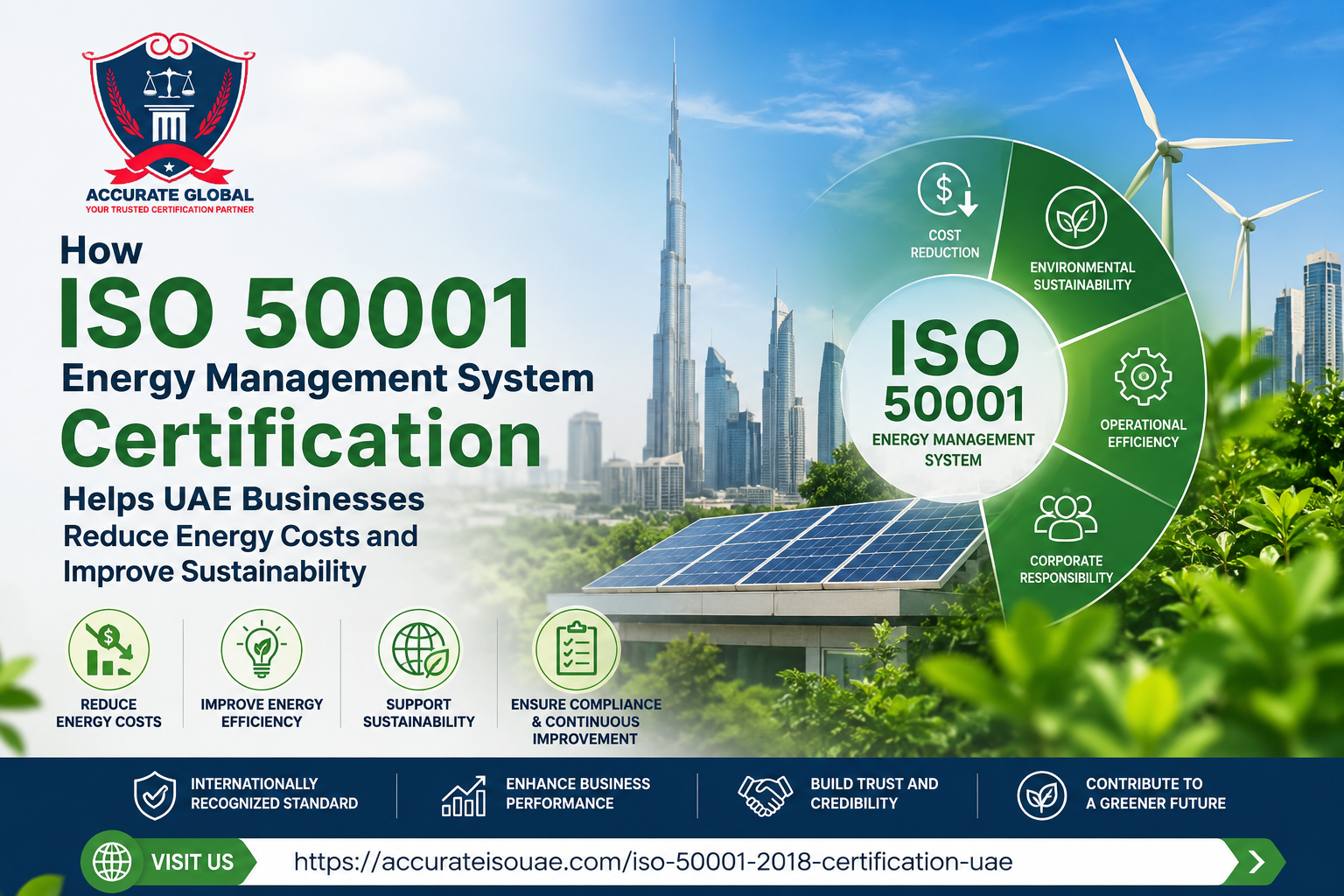
In today’s competitive business environment, organizations are constantly searching for ways to reduce operational costs, improve productivity, and achieve sustainable growth. One of the most effective ways to accomplish these goals is through implementing an Energy Management System (EnMS). This is where ISO 50001 Energy Management System Certification plays a vital role.
ISO 50001 is an internationally recognized standard designed to help businesses improve energy performance, optimize energy consumption, and enhance operational efficiency. Companies across manufacturing, construction, logistics, healthcare, hospitality, and other industries are adopting ISO 50001 certification to create a more energy-efficient and cost-effective workplace.
Businesses in the UAE are increasingly focusing on sustainability and energy management, making ISO 50001:2018 Certification UAE an important step toward operational excellence.
What is ISO 50001 Energy Management System Certification?
ISO 50001 is a globally accepted standard developed by the International Organization for Standardization (ISO). It provides a systematic framework for organizations to establish, implement, maintain, and improve their energy management systems.
The main objective of ISO 50001 certification is to help businesses:
- Reduce energy consumption
- Improve energy efficiency
- Lower operational costs
- Minimize environmental impact
- Enhance overall business performance
By implementing ISO 50001, companies can continuously monitor energy usage and identify opportunities for improvement.
Importance of Operational Efficiency in Modern Businesses
Operational efficiency refers to the ability of an organization to deliver quality products or services while minimizing waste, reducing costs, and maximizing productivity.
Energy is one of the largest operational expenses for many businesses. Poor energy management can lead to:
- Increased utility costs
- Equipment inefficiencies
- Production delays
- Resource wastage
- Reduced profitability
ISO 50001 Energy Management System Certification helps organizations address these issues through structured energy management practices.
How ISO 50001 Certification Improves Operational Efficiency
1. Reduces Energy Consumption
One of the biggest advantages of ISO 50001 certification is its ability to reduce unnecessary energy usage.
The standard helps organizations:
- Monitor energy consumption patterns
- Identify areas of excessive energy use
- Implement energy-saving measures
- Optimize equipment performance
Reduced energy consumption directly lowers operational costs and increases profitability.
2. Enhances Equipment Performance
Machines and equipment consume significant amounts of energy. Inefficient equipment can slow down production and increase maintenance costs.
ISO 50001 encourages businesses to:
- Regularly monitor equipment efficiency
- Conduct preventive maintenance
- Replace outdated systems
- Use energy-efficient technologies
Improved equipment performance results in smoother operations and higher productivity.
3. Improves Process Efficiency
ISO 50001 promotes continuous improvement in energy management processes.
Organizations can analyze operational workflows and identify areas where energy is being wasted. By optimizing these processes, businesses can:
- Reduce production downtime
- Improve workflow management
- Increase operational speed
- Enhance resource utilization
Efficient processes contribute to better overall business performance.
4. Lowers Operational Costs
Energy costs can significantly impact a company’s budget. ISO 50001 certification helps businesses reduce utility expenses by improving energy efficiency.
Cost savings can be achieved through:
- Reduced electricity usage
- Better fuel management
- Efficient heating and cooling systems
- Improved lighting systems
Lower operational costs allow organizations to invest more in growth and innovation.
5. Supports Data-Driven Decision Making
ISO 50001 requires organizations to monitor and measure energy performance regularly.
This data-driven approach helps management make informed decisions regarding:
- Energy investments
- Operational improvements
- Equipment upgrades
- Resource allocation
Accurate data analysis improves strategic planning and operational control.
6. Encourages Employee Awareness and Engagement
Employees play a crucial role in maintaining operational efficiency.
ISO 50001 certification promotes employee involvement by encouraging:
- Energy-saving practices
- Staff training programs
- Awareness campaigns
- Continuous improvement initiatives
When employees understand the importance of energy management, organizations can achieve better operational outcomes.
7. Reduces Environmental Impact
Efficient energy management not only improves operational efficiency but also supports environmental sustainability.
ISO 50001 helps businesses reduce:
- Carbon emissions
- Energy waste
- Environmental pollution
Sustainable operations improve brand reputation and demonstrate corporate social responsibility.
Benefits of ISO 50001 Certification for UAE Businesses
The UAE is actively promoting sustainability and energy efficiency across various industries. Businesses implementing ISO 50001 certification can gain several competitive advantages.
Compliance with Regulatory Requirements
Many industries are required to follow environmental and energy regulations. ISO 50001 helps organizations comply with local and international standards.
Improved Corporate Reputation
Certified businesses are viewed as responsible and environmentally conscious organizations. This improves customer trust and business credibility.
Increased Competitive Advantage
Companies with ISO 50001 certification often stand out in the marketplace because they demonstrate commitment to sustainability and operational excellence.
Better Risk Management
Energy-related risks such as rising utility costs and resource shortages can impact business operations. ISO 50001 helps organizations proactively manage these risks.
Industries That Benefit from ISO 50001 Certification
ISO 50001 Energy Management System Certification is suitable for organizations of all sizes and sectors, including:
- Manufacturing industries
- Construction companies
- Hotels and hospitality businesses
- Healthcare facilities
- Logistics and transportation companies
- Educational institutions
- Oil and gas industries
Any organization looking to improve energy efficiency and operational performance can benefit from this certification.
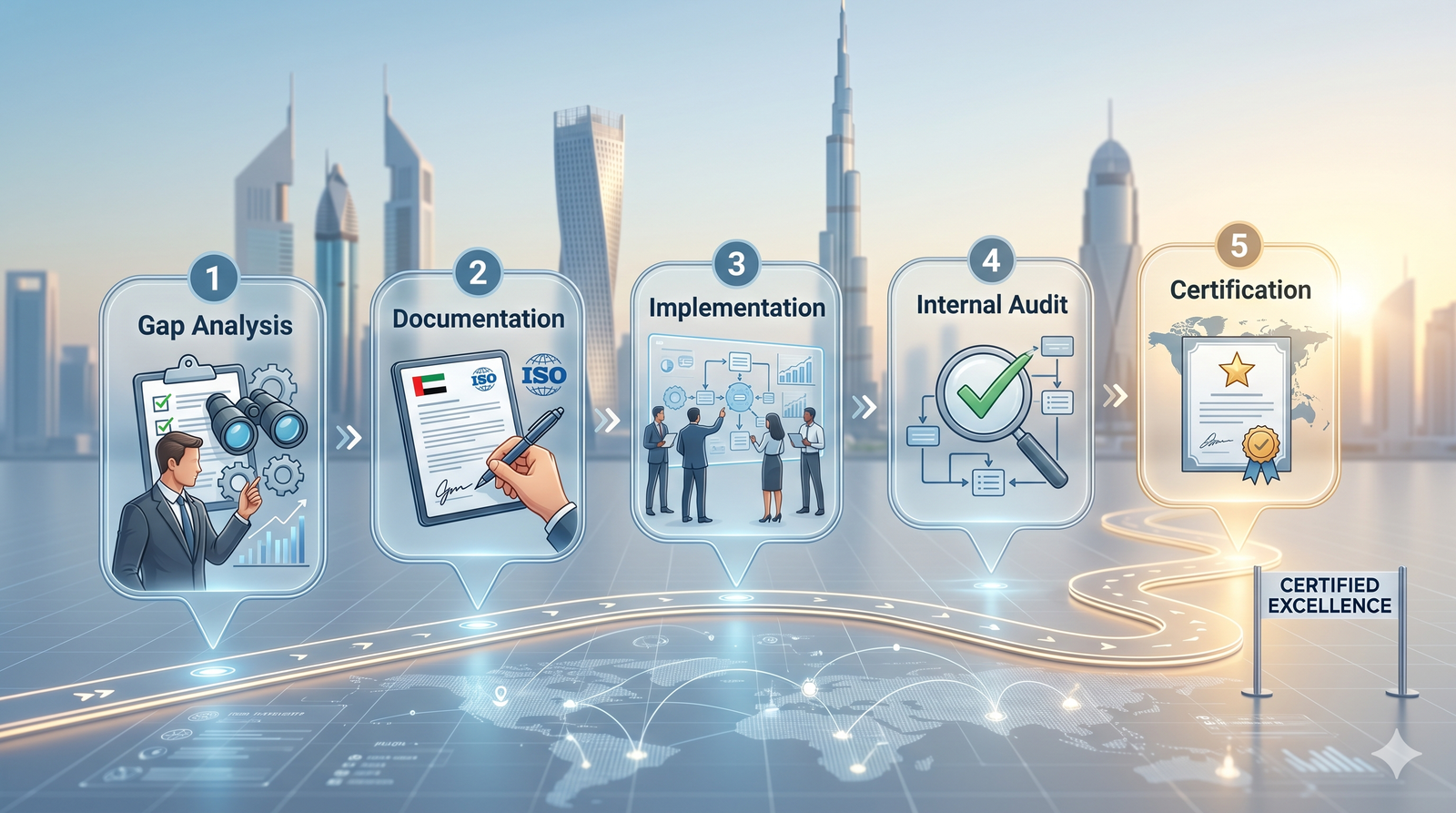
Steps to Achieve ISO 50001 Certification
Businesses can follow these steps to implement ISO 50001 successfully:
- Conduct an energy review
- Identify energy performance indicators
- Establish energy objectives and targets
- Implement energy management controls
- Monitor energy usage regularly
- Conduct internal audits
- Undergo certification audit by an accredited body
Working with experienced consultants can simplify the certification process and ensure successful implementation.
Conclusion
ISO 50001 Energy Management System Certification is a powerful tool for organizations seeking to improve operational efficiency, reduce energy costs, and achieve sustainable growth. By implementing effective energy management practices, businesses can optimize performance, enhance productivity, and strengthen their competitive position in the market.
.png)
.png)
.png)
.png)
.png)
.png)
.png)